

Talent Talks: Venessa Moffat
Introducing Talent Talks, the podcast where we dive into all things talent in the real estate, construction, and infrastructure world. From the boardroom to the building site, we uncover the stories, insights, and people shaping our industry today. We shine a spotlight on data centres, one of real estate's fastest-growing and most in-demand sectors.
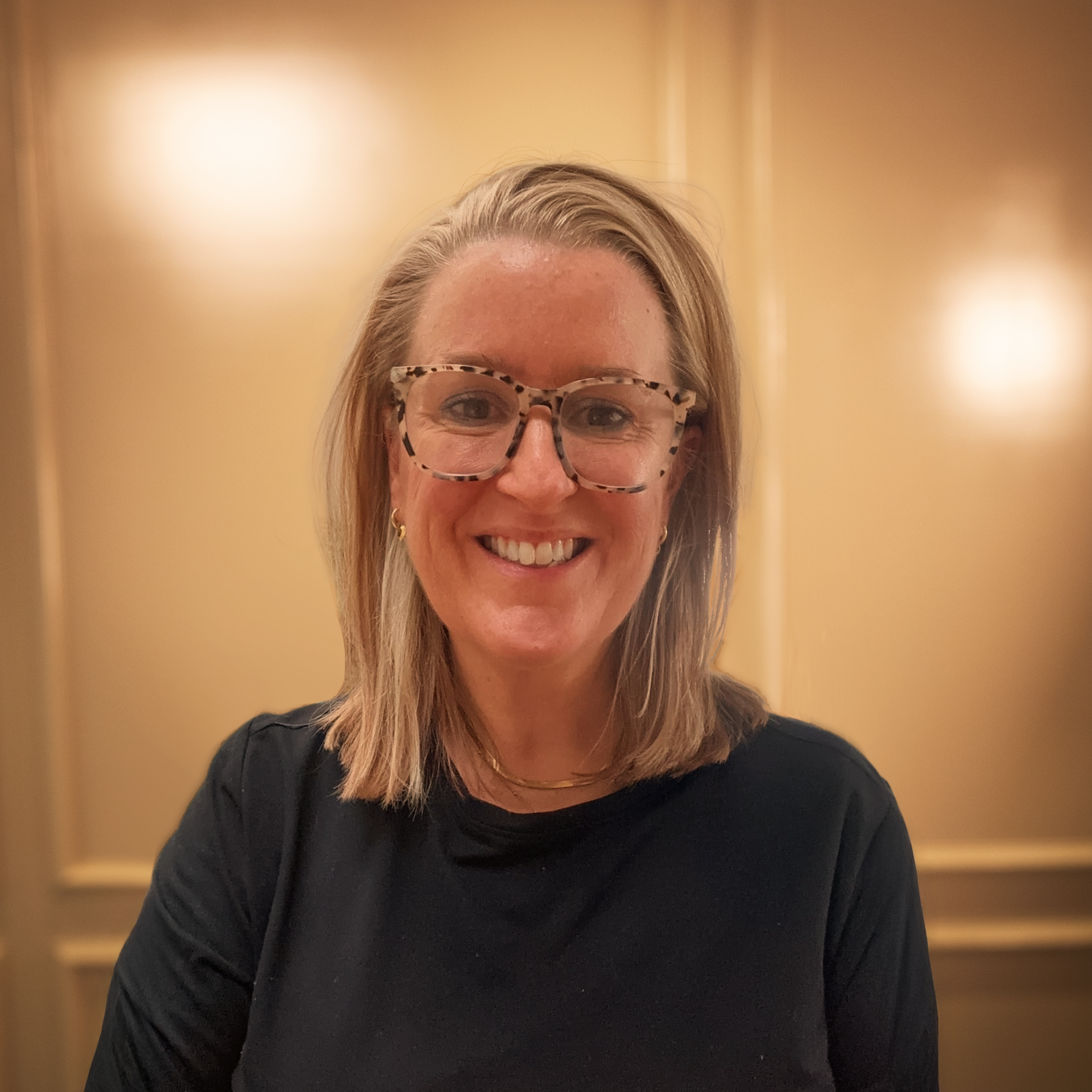
In this episode of Talent Talks, Venessa Moffat, Managing Director of the Data Centre Alliance, joins Sarah Davenport and Oli Coote to explore the rapidly shifting landscape of digital infrastructure. Drawing on two decades of experience and her unique dual perspective as both an industry leader and a local councillor, Venessa discusses the critical challenges facing the sector, from the "power, planning, and policy" hurdles of national infrastructure to the urgent need for a more inclusive workforce. The conversation highlights how the explosion of AI and hyperscale requirements is redefining data centre architecture, while emphasizing that the industry's long-term resilience hinges on diversifying its talent pool and embracing neurodivergent thinking.
Watch this episode on YouTube:
Listen to this episode on:
You can read the transcript of the discussion below:
Sarah Davenport
Today on Capstone Talent Talks, we are joined by Venessa Moffat, the Managing Director of the Data Centre Alliance, with over 20 years in the digital infrastructure space. Day to day, Venessa operates at the intersection of energy, AI, and infrastructure, bringing a straight-talking perspective on how the sector evolves to meet growing demand. Alongside that, Venessa is a strong advocate for building a more diverse and accessible talent pipeline, recognising that the industry's future success depends on opening it up to a broader range of skills, backgrounds, and thinking. Venessa, thank you so much for joining us.
Venessa Moffat
Thanks for having me. Pleasure.
Sarah Davenport
So, Venessa, maybe you could tell us a bit about how you got into the data centre industry and a bit about the roles that you've had.
Venessa Moffat
Yeah, of course, no problem. And I think if you speak to quite a few of us in the sector right now, we'll probably tell you that we fell into it. It was never really a destination for us, probably because we kind of started work before it really was a thing. So, I actually started in IT, and then the computer rooms that started off as a room in the corner of the office became server rooms, and now they're data centres. So, here we are. I did kind of fall into it, or maybe I grew with it. I'm not really sure.
I started off as an IT manager in a business integration company. There was always software around at the time. And then I moved into the sector in real terms, I suppose, with SunGard, Service Interaction, which is now Digital Realty, and a few other operators I've worked for as well, as well as a global role with the Uptime Institute, who, as you know, hold that commercial standard for tier ratings for data centres globally. And now I'm working with the Data Centre Alliance, as you mentioned, and we are doing our best to harmonise the sector. We've been around for about 16 years, so quite a while. We're really just trying to provide value to our members, collaborate across various different borders, and make sure we're harmonising the sector and collectively learning.
Oli Coote
And so, what does the membership of the Data Centre Alliance look like as a body? How many organisations are part of that? And I guess on a day-to-day basis, what does that mean in terms of what you're involved with, and equally what those members of the Alliance are involved with as well?
Venessa Moffat
So, we have nearly 200 members, we've got lots of different layers of members, but in total around 200. If you take it on an individual basis, that would be about 5,000 people that we're connected to in our network. We try to organise events; we have things on the influencing side and things that really help to raise the profile, both of the sector, of our members, and of the trade association itself. On the influencing side, we have an advisory council, which is 65 members strong, 65 people across the sector, all data centre experts in different aspects of it, because we represent the whole ecosystem, not just operators. So, all of the supply chain: if you're a lawyer or an architect, you're part of our membership, part of our ecosystem.
This advisory board is where all of the work happens. We have a Kanban board where anybody can put an idea forward, and that idea will be reviewed by the advisory board and then taken forward, they'll build a team around it and that's where working groups happen, or maybe there's a project put together, or it's a tiger team, or maybe it's just a white paper put together for the sector. And that's all happening around the advisory board. We also partner with media and events companies. We host our own events, four or five different events a year, around the country. We try to spread ourselves around, even though we're a small country, and involve as many people as we can.
Oli Coote
How has the advisory board evolved over time?
Venessa Moffat
Yeah, so it used to be quite a lot smaller, and we found we couldn't get as much work done as we wanted. But now we've got such a large and diverse membership that we can do all sorts of different initiatives. We've got charity initiatives being put forward, sustainability initiatives that are part of the sustainability working group, energy efficiency, and yeah, there's just so many different things we can do now that become more possible with more people. The advisory council was relaunched this year at DCW.
Oli Coote
And I would imagine, given it has grown and the different people involved as advisors, coming from different parts of the supply chain and the ecosystem, there can be some robust conversations happening between advisors, which is probably a really good thing, isn't it? Because it's how ideas get checked, opinions are heard, and ideas can be properly thought through.
Venessa Moffat
They're quite a vocal group. If they don't agree, they will definitely tell you, but it's all very respectful. It's great to sound out ideas and assess others. We can say, 'This one's a much stronger one for now because of the timing,' and so on, but it will be a robust conversation between that group of people. And yeah, as you say, they are quite vocal and they're not shy at coming forward.
Sarah Davenport
And what are you hearing are the hot topics that the members are trying to influence at the moment? Obviously, you've mentioned sustainability, but what's fundamentally important to the members right now?
Venessa Moffat
I think obviously power is massive, from so many different angles, from grid availability to new companies innovating around that and trying to find business opportunities within it. So power is one main one. Permitting as well. I don't know if you've seen the vacancy rates recently, globally, actually, not just in the UK. They're really very, very low, sort of 5 to 6 percent. And even in the US, I've seen some lower percentages in various areas. So, vacancy rates are driving quite a lot of conversation, but also opportunity.
We're finding ourselves in this weird paradox: we're building so many AI data centres, and yet we can't find co-location space. I suppose we shouldn't mix the two, because they're not necessarily the same thing. A lot of the vacancy rate statistics are about co-location, not necessarily about AI data centre space, so there is that danger of conflation. But it's a very interesting time to see how we come out of this.
Sarah Davenport
Absolutely. And is it UK-centric? I'm assuming so, because I know you've done a lot of work globally yourself, but for the DCA specifically?
Venessa Moffat
Yeah, so we serve the UK market, but we are very well connected across EMEA. We support events across EMEA. There are, we found, about 100 data centre events at the moment around the world, about 35 that we're supporting, which is quite a lot. But those events are not just in the UK; they're also around EMEA.
Oli Coote
You mentioned power there. What other shifts have you seen over the past six or seven years, whilst you've been at the DCA, but equally beyond that as you've spent time in the industry? What are some of those shifts that you've been part of, or witnessed?
Venessa Moffat
Wow, yeah, there are loads. I think the first one was probably back in the 2000s, just before the computerisation of IT and before cloud came along, we had this kind of star network shape, a client-server shape of data centres. Everything was fed from the data centre, and we didn't have access to everything from anywhere. You couldn't put something in your Amazon basket and have it available on another device somewhere else. We didn't used to have that. And then cloud came along and enabled all of that functionality, but it also changed the architecture of the internet almost, and the way that people buy data centres. And then that evolved into hyperscale. And now we've got AI, which is changing the architecture of the internet again.
I find it fascinating to watch that shift happen once more. Another one is the scale of deployment. Data centres used to be 4 kilowatts of rack homogeneously across each data centre, that's how they were built. And now we're building 70 to 100 kilowatts per rack, which is extraordinary. The installations used to be kind of 5 to 20 megawatts, and now we're looking at hundreds of megawatts for a single data centre. That scale thinking has just exploded over the last couple of years. And then sustainability, about 15 years ago it was definitely on the table, and we were talking about it quite a lot, but nobody wanted to invest in it. What we've seen over the last few years is that people are starting to take it really seriously; it's now part of their business plan, and there's sustainability-led investment. If you're not running your organisation in a sustainable way, you won't get that investment. So, things are changing, and it's really positive to see quite a lot of these changes.
Sarah Davenport
Yeah, and I think nothing focuses the mind more than commercial benefits and investment, which is ultimately vital. And what about on the planning side of things in the UK? I know you've got a unique perspective here, talk to us about what you're seeing from a data centre perspective, and maybe you can also share a bit about the other hat you wear, which might be really interesting for people to hear.
Venessa Moffat
Yeah, of course. I'll start with data centres being designated as Critical National Infrastructure, which was back in September 2024. We've seen a few things flow down from that, but if you look at the government CNI sectors on their website, we are still not mentioned anywhere. And I think, and this is just my opinion, the reason for that is that we cross over so many of the segments. You can't really put us underneath transport, or energy, or any of the others, because it doesn't fit in a clean way. We're almost being regulated by Ofcom, so under communications, but you can't really put data centres under communications, if you see what I mean. It just logically doesn't work. I think they're struggling with that, and that's my supposition, not fact. But I think because of that, there have been some things that have been difficult to implement, and that is where the planning element comes into play. We are critical national infrastructure, we are strategic infrastructure, and that needs to flow into the planning system. What's happened previously is that we've devolved digital infrastructure. But if you look at the digital infrastructure policies, even from a local level, and as you mentioned, I do have another hat; I'm a local councillor. So, I see this from a local level as well.
If you look at digital infrastructure policies at that level, they're all about digital communications, not about digital infrastructure. They talk about broadband to the home, possibly broadband to the business, they do not talk about what holds all of that together, i.e. data centres. So, there's a massive policy gap at the local level. The government made a change to the National Planning Policy Framework a year or two ago, and in that it said local councils must consider data centres as an option. But if I put my other hat on as a local councillor, we are under so much pressure to build houses. So, if we had a piece of land where we had the option to either build a data centre or a bunch of houses, it will almost always go to the houses. Not only that, but local authorities don't necessarily have very much information about what data centres do, what they can give back to the community, and so on. So, data centres aren't necessarily the best option from that point of view.
That policy gap is having a real impact on how any data centre operator approaches a council and says, 'I want to build this.' And the council says, 'Okay, we don't really know how to deal with that.' That's why we're seeing this take multiple iterations, it's a negotiation every time, instead of a decision point. We don't have a use class for data centres, or even a sub-classification. Data centres are currently put into either sui generis or B8, which is essentially storage and distribution, industrial space. And it causes even more problems, because when you put a data centre into industrial space, you have no residential around it. So how are we supposed to use the heat that comes out of a data centre if there's nothing built nearby to use it? There are lots of problems around this, and I think it starts at that CNI level, which is why I started there. If we can realise that this is a national issue and not just about broadband to the home, then bringing all of that together might make it work. But right now, we've got so much pressure on our system. Investors look to countries and they look at power, planning, policy, and people. If any one of those looks really hard, they'll probably just invest elsewhere. The UK really has to speed up some changes and make this better fairly soon. We do have a national planning statement coming out for data centres, it should be imminent, and I'm really looking forward to it.
Oli Coote
That would be interesting to see, because it does need to come from the top down. And it's the speed, isn't it? That's the challenge, so often these things are just very slow moving, which is in direct contrast to where we are as an industry and the speed at which things need to move.
Venessa Moffat
Yes. They did put in place the option for data centres to opt for the strategic route, the NSIP programme for strategic projects. But it's such a cumbersome process that it will only really be useful for the larger installations, not for smaller data centres. I see that being used by maybe 5% who really want to go through that process; the rest have to deal with what's in place now.
Sarah Davenport
And if you think about all these priorities, there's so much evolution needed, and it's not just about labelling something CNI, it's about how we build something effective in terms of process and structure. But if you think about the sector intertwining between energy, AI, advanced manufacturing, and all of this critical national infrastructure, are you seeing people adapt or attract the relevant talent to fulfil those trends and priorities?
Venessa Moffat
Yeah, it's such a great question, and there are so many facets to it. If we start with engineering, because we've got quite a heavily engineering-orientated sector, we've got maybe 60 to 70% engineering roles in the data centre sector. And I think that makes it difficult, because if we're trying to hire from a pool that's already very, very challenging, it's going to be difficult to get staff. But equally, we're not employing enough females, in my view. Tech sectors as a whole have an average of 26% female representation. Our sector is between 9 and 12%. I think we really need to look at ourselves and see what we can do about that. Because I don't think it's just about attracting people, it's retention.
Sarah Davenport
Yeah, otherwise it's just a revolving door.
Venessa Moffat
Exactly. And if we can't retain people in this sector, then we're really doing something wrong. And that's not just for females, but if we're losing people at this particular time to other sectors, we really need to look at how we're treating people and how we're nurturing and bringing them on. So, I think retention probably should be one of our main focuses, making sure we do the right things to bring people on this journey, because it is a journey and a constantly evolving one. There's enough room for everybody.
Sarah Davenport
And I think if you're looking at female representation in a sector where 60 to 70% of the roles are engineering, which is heavily male dominated, it's not just about looking at the end point of getting women into data centres and then retaining them. There's actually a huge piece around education and getting girls interested in, invested in, and motivated by STEM subjects. Are you seeing much happening at that end that's interesting to you?
Venessa Moffat
Yeah, I actually went to a networking event around one of the industry events recently, and the whole room was full of young people, and I was like, 'This is brilliant, I don't know anybody here, it's absolutely brilliant.' So, yes, I'm definitely seeing some good things. I'm also seeing some people reach out to sixth-form colleges and universities, working with the younger generation and actually making this a destination, which it wasn't when we were younger. We didn't know this existed. So, I think it's starting to become something people might actually want to be part of. I'm seeing more apprenticeship roles, internships, and so on. I think the tide is changing. We definitely need to do more and definitely not take our foot off the pedal.
Oli Coote
Yeah, there are definitely some really good initiatives out there, from primary schools, with some organisations going in and running sessions, right up to universities. And I think the apprenticeship side of things is really interesting. I know the numbers are still quite small, but if that can build out more, it starts to create even more opportunities, which would be great.
Venessa Moffat
With the apprenticeships, with the Rising Star Awards, if you look at all of the awards that are coming through, you'll see there's a Rising Star or Young Person or Talent Development award in there somewhere. We're changing the sector to actually reward this behaviour, and I think it's great. There are a couple of events companies who will only do panels if there's a female on that panel. And I think yourselves as well, with this podcast series, you're making sure it's diverse and a really good cross-section of the sector. I think all of these things really do have an impact and do some good in the sector.
Sarah Davenport
Yeah, and I think if you look at that, it's about action. What frustrated me probably a year ago was that there was so much talk about talent, and I was thinking: I love a chat, but where's the action? And actually, I've really seen an increase over the last 12 months. You've got Katrina Shearer running her Women's Speaker Series, and we're now partnering with her to roll that out to more people, which is brilliant. Because even at events over the last couple of years, there are more women panellists, moderators, and speakers, but often it's the same women, and they're amazing, but there's still a lack of diversity. So, a brilliant part of that programme that Katrina launched is that we are now sharing the details of delegates who have attended the speaker series with event organisers, along with their specialisms. So, that we're not just having women talking about talent or sustainability, but having them in the mix for really technical conversations around cooling, for instance. It's great that people are being held to account and that others are really obsessing about action.
Venessa Moffat
Yeah, no, it's absolutely brilliant to see, it really is. And I love Katrina's initiative. She's also mentoring people, I believe as well, so.
Sarah Davenport
Yeah, she's part of our mentoring programme. She always has three mentees on the go at any one time, and she's super generous with supporting people coming through. So, we love working with her and the outcomes she's achieving. So that's great. And you've spoken about the need for more joined-up thinking across the industry, and obviously the DCA is exactly that. How is that impacting talent attraction and retention, do you think?
Venessa Moffat
We are trying to encourage all of these initiatives. We can't run everything, we're just one organisation, but we will do as much as we can to encourage them. We're probably going to release something soon called 'sector signposting'. It's not fully formed yet, but what we'll try to do is signpost all of the good things that are happening in the sector, whether it's training, groups, socialising, or certification, all the kinds of things that are good for people to get involved in. Even if you're brand new to the sector and don't know where to start, this will be your guide to signpost where to go, who to talk to, and where to get involved. That's the kind of thing we're trying to do, because obviously one organisation can't run everything. But if we can bring it all together somewhere and say, 'Look, here's our sector, come and get involved,' then we'll do that.
Oli Coote
I think that's great. It's all part of helping people, particularly if they're new to the sector or earlier in their career, to actually see it in order to be it. If you don't have that direction, or that understanding of what someone does day-to-day in that type of role or company, it's very hard to know that that's even a pathway for you. The more opportunity people have to see those things and be a part of it, that awareness helps bring people through and excites them about entering the sector, which is really important.
Venessa Moffat
I was at a sixth-form Careers Day a couple of weeks ago, and just talking to the other exhibitors, some had very fixed benchmarks people had to meet: a degree in this, an A-level in that. Our sector is so diverse in the different pathways you can choose. You don't actually have to have a traditional route in; you can train on the job in this area and work your way up in another. There are so many different entry points, and from a general business perspective, lots of different things you can do as well. Getting that message out there, to say, 'If you've done physics and maths at A-level, you can come and start at this kind of company', is really valuable. It's great getting that message out there. And actually, data centres are a bit more public now, people understand what they are a bit more. So yeah, it's great.
Sarah Davenport
And if you think about the next three to five years, Venessa, what are your thoughts on what's going to separate organisations from a talent and performance perspective?
Venessa Moffat
Wow, okay. I think, generally speaking, and this is not even just for talent, people need to not do what we did before. That old phrase of 'we've always done it that way' is probably the most dangerous way of thinking right now, given where we are. You have to innovate; you have to be forward-thinking. Maybe look a couple of steps ahead and plan for where we might be in a couple of years' time, because this industry is changing so fast. Being forward-thinking rather than looking back and saying, 'We've done it this way the whole time, so we're going to carry on', that's probably the most dangerous path you can take right now.
Oli Coote
It's interesting as well, because when we speak to people about what it takes to work in the data centre sector, and I mean more from a mindset perspective than a technical one, a couple of things always come up. One is curiosity: if you're the sort of person who's genuinely curious, I think that's a great trait. Equally, someone who's flexible, agile, can roll with things, and looks for solutions, that problem-solving mindset. It speaks to the speed of change and how you do need to have that kind of approach, because it's not going to stay the same. You come in, and any given day, week, or month is probably going to present different challenges.
Venessa Moffat
I literally couldn't have said it better myself. The word in my head when you started saying that was 'adaptability'. And I think if you can adapt, you'll do absolutely brilliantly in this sector. To really highlight this point: when we were building data centres back in 2010, 2012, we had a 10-year business plan for them and the technology didn't change for those 10 years at all. Now we're building data centres and we're not even sure if the technology is going to be the same in two years' time. We actually think the technology will be obsolete in two years. So, what do we do with the building when it is? We're literally building buildings around chipsets now. You have a chip that consumes a certain number of watts, and the building then has to be built to cope with that. And that's the scary thing about this; it will all change.
Sarah Davenport
Well, that's why we need younger people in the industry, not least because we've got an ageing workforce who will be retiring in the next 10 to 15 years, but also because they have the agility of mind. And this is where I think neurodivergence could be our secret weapon within the data centre sector, the quick thinking of the ADHD mind, the diverse thinking, not being fazed by ambiguity. Neurodivergent people are almost used to that every single day. We need that, don't we?
Venessa Moffat
Yeah, we need to be able to embrace all of that. And we know that diverse teams perform best. And that's what we need right now. With all of this change, we need diverse teams that can act quickly and in a really cohesive way. It's amazing, it's fascinating times. I have to say it's my favourite time in the sector so far.
Sarah Davenport
Well, it's changing so quickly. I think that's what's so daunting, and the fact that most of the careers our children are going to be doing don't exist yet. And I think the data centre sector is probably the most demonstrable example of that.
Venessa Moffat
Yeah, definitely, especially with AI coming in as well. We don't really know what we're going to use it for. We've got a lot of business cases coming in for building data centres for AI purposes, but we're not completely sure who the end customer is going to be, let alone how it will be used or what the growth profile looks like. Things are so uncertain for the next few years, but it will pan out. We'll see some things that put a few stakes in the ground here and there, and it will grow. I think we will see where it's going in the coming 18 months.
Sarah Davenport
Yeah, I can't help but feel that over the last 18 months there has been such a panic around AI and adoption. The trajectory has literally been this, almost vertical. But I do wonder whether there will be a slight cooling of demand or adoption, where people think, 'Hang on, we don't need to do everything at once', and therefore we can regroup a bit before going again. But maybe that's wishful thinking on my part.
Venessa Moffat
No, I think you're absolutely right. There are a lot of people who talk in black-and-white terms about this and call it an AI bubble, but I really don't think it's a bubble. If you think about the infrastructure in a communications kind of way, if you look at the dot-com boom, the infrastructure may have been built out a little bit too much. But if you layer that with things like the big platforms, OpenAI and so on, those big platforms will still continue to exist and grow. They will be charging differently. The tokens and fees for tokens are going to come in, and once we have the economics working, things will settle down a little bit. But equally, you're going to have all sorts of AI applications in different verticals, they'll come in, they'll either fail or do really well, and you'll see a bit of that as well. So, it'll be a bumpy ride for some, but it's not going to be a wholesale bust. That definitely won't be happening.
Oli Coote
And it's also about who's driving it, the consumer demand side, the tech side, the advances in chips. Part of it is trying to almost keep pace with that, but then that keeps advancing because of AI as well. I guess that's where there might be a bit of balance, if we're all still able to use everything we need to, then that's okay. But it's the advances in tech that also drive it, and trying to keep up with that.
Venessa Moffat
Yeah, and it's interesting because the economics is going to be around our daily lives. If we're saving, say, three hours a day because of some AI tool, we'll be prepared to pay for it. It's that value and benefit that's currently very difficult to quantify. But as you probably know, when you use Claude or ChatGPT or something like that, it probably does save you some time on research, so you're happy to pay for it and subscribe. Those kinds of tools will come, and there'll be more freemium business models, 'this is free for now, but we're trying to figure out how to monetise it.' And when it is monetised, it will settle down a little bit. That's why we feel like we've got a bit of a boom right now, we're not paying for a lot of the services being provided. Somebody is, somebody's paying for the energy down the line in a data centre, but not directly, yet. That will come.
Sarah Davenport
From a personal perspective, I'm not sure I've asked a guest this, but maybe we should ask each guest, what one piece of AI has had the biggest positive personal impact on you?
Venessa Moffat
Great question. Probably ChatGPT. I ask it some really random questions, but it's quite useful. If I've got a load of documents, maybe 20 documents, I might feed them into ChatGPT and say, 'Give me the common trends across these.' And it takes seconds. So yeah, that kind of thing is incredibly useful.
Oli Coote
That's probably it for me as well. Although, there's probably AI working in the background of other things that are part of my daily life that I'm not particularly aware of, and it's probably doing a great job that I should be more appreciative of.
Sarah Davenport
Yeah, probably! Okay, well, I might start asking guests that, and actually it will be really interesting to see how that changes over time. Venessa, you've been an unbelievable guest and really generous with your thoughts and insights. You've got such a unique perspective, and we're lucky to have you. Thank you so much for joining us. It's been an absolute pleasure.
Venessa Moffat
Not at all, I've really enjoyed it. Thank you.
Oli Coote
Thanks, Venessa. Thank you.
That was an insightful conversation with Venessa Moffat, Managing Director of the Data Centre Alliance. With over 20 years in the digital infrastructure space, Venessa brought a uniquely layered perspective, spanning the strategic challenges of power, planning, and policy, to the very human questions around talent, diversity, and retention. Her dual role as both Managing Director of the DCA and a local councillor gave rare insight into the disconnect between how data centres are classified nationally and how they are experienced at the local planning level. Venessa's passion for broadening the sector's talent pipeline, championing retention, neurodiversity, and early engagement with young people, was both practical and inspiring. We are extremely grateful to Venessa Moffat for joining Sarah Davenport and Oli Coote on Capstone Talen
Related Insights
\\