


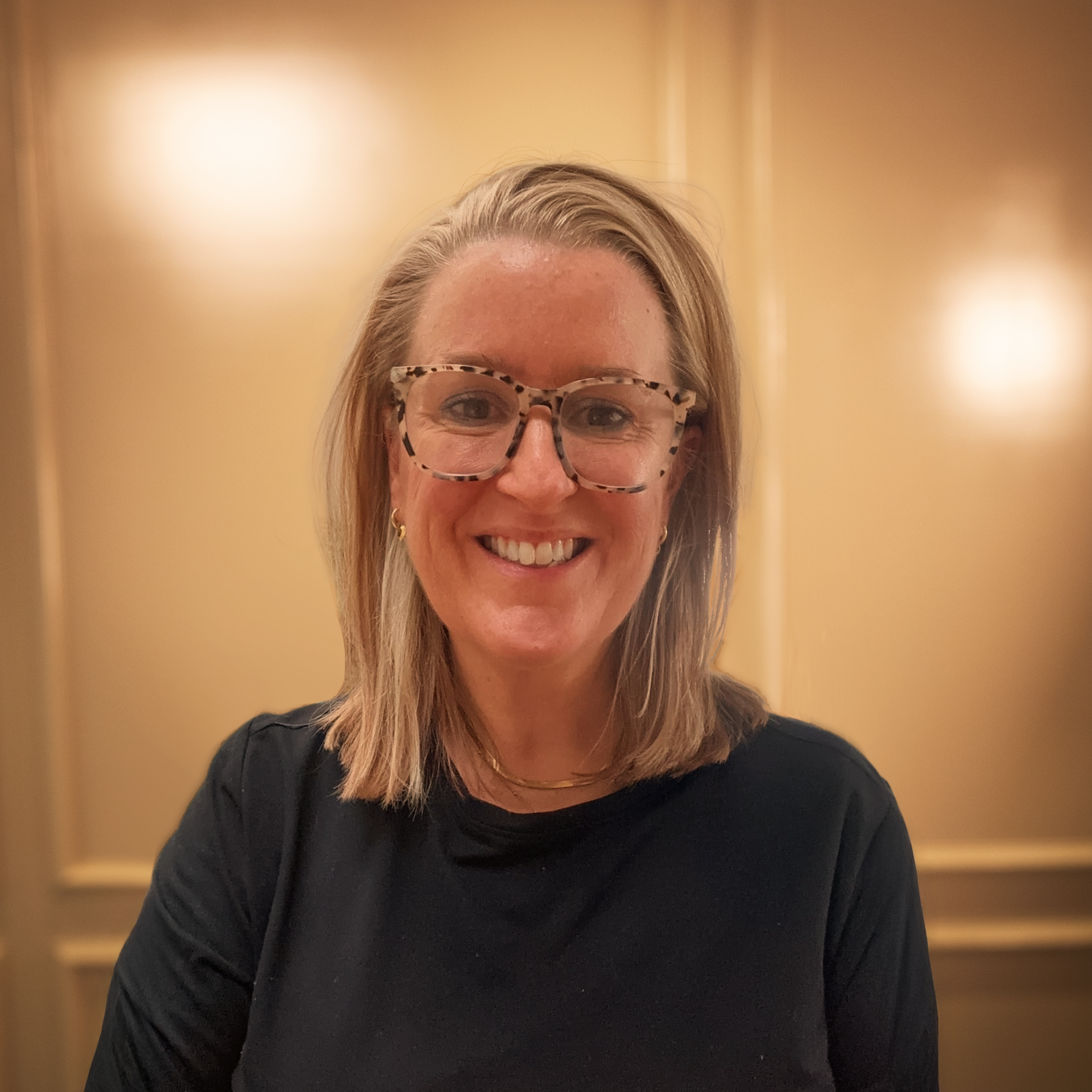
Talent Talks: Svein Atle Hagaseth
Introducing Talent Talks, the podcast where we dive into all thing’s talent in the real estate, construction, and infrastructure world. From the boardroom to the building site, we uncover the stories, insights, and people shaping our industry today. We shine a spotlight on data centres, one of real estate's fastest-growing and most in-demand sectors.
In this episode of Talent Talks, Sarah Davenport and Oli Coote sit down with Svein Atle Hagaseth, CEO and co-founder of Heim Datacenter to learn more about his journey from commercial leadership at Green Mountain to building the next generation of AI-ready, sustainable digital infrastructure. Svein shares his insights on leadership, talent, collaboration and why the future of the data centre industry depends on building businesses that create value for people, communities and customers alike.
Watch this episode on YouTube:
Listen to this episode on:
You can read the transcript of the discussion below:
Sarah Davenport
On today's episode of the Capstone Talent Talks podcast, we're delighted to welcome Svein Atle Hagaseth, one of the best-known commercial leaders in the European data centre industry.
After helping grow Green Mountain into one of Europe's leading hyperscale data centre operators, he recently took on a new challenge as CEO and co-founder of Heim Datacenter, a business focused on developing the next generation of AI-ready, sustainable digital infrastructure across the Nordics.
With a career spanning technology, commercial leadership and now entrepreneurship, Svein brings a unique perspective on what it takes to build a business, lead through rapid industry change and shape the future of digital infrastructure. Svein, welcome to Talent Talks. It’s great to have you with us.
Svein Atle Hagaseth
Thank you very much, and thank you for having me.
Sarah Davenport
No problem. So, Svein, let’s start with your career.
Svein Atle Hagaseth
I started as everybody else who starts in the data centre industry does: by coincidence. I started out doing strategic IT outsourcing, very similar to M&A-type activities, at different IT companies. By coincidence, I read an article in a Norwegian newspaper saying that Green Mountain was going international. So I did what a lot of people like me do: I picked up the phone and asked, ‘What do you mean by international?’ That became the start of a fantastic 10-year venture into the data centre industry.
But before that, I started out as a semi-professional ice hockey player. When I figured out that I wasn’t really good enough to do that, I started to educate myself to move into a more business-focused career. I started working at UPS in customer services and figured out that I liked speaking to people. I ventured more into sales. Sales then led into management, and management led to where I am now.
Sarah Davenport
Amazing. So, tell us how you found the transition into data centres.
Svein Atle Hagaseth
It was very different. When I entered the data centre industry, the message was very technical, and it still is. I don’t think a lot of people outside the data centre industry really understand it. They don’t always understand the complexity involved, what it actually entails and why we need data centres.
We started to change the Green Mountain message around 10–12 years ago, moving from just security and the operational aspects of data centres to why we need them and how we can actually create value for our owners, our employees and the market in general. So it went from a very technical message to a more value-based one.
Oli Coote
I think often, when we’re speaking to people, there are always a few people along the way who help move the needle for you and create opportunities. Did you find that at that transition, or at other times as well?
Svein Atle Hagaseth
Yeah, I think you always need to learn from other people. As you gain experience, you see a lot of different things that work and some things that don’t. So it’s good to have people who get you on that journey, but also accept it when you try to do something that’s a little bit different.
I had really good people at Green Mountain, both the CEO who was there at the time and Christine, who is now also one of the founders of Heim. They saw that the real differentiator in the data centre market is not how you build the data centres, but how you actually build relationships, trust, credibility and execution capability. Those are important aspects. I think when we started to focus more on those aspects, that’s when the growth came for Green Mountain.
Sarah Davenport
That’s interesting. So, do you think part of the growth trajectory was down to repositioning the business around the ‘why’ and that value-based message?
Svein Atle Hagaseth
Yeah, I think it was a significant contributor to how we became successful. When I started in 2016, Green Mountain was struggling a little bit. We were a small domestic player in Norway, but we had never really cracked the code on how to gain international clients.
A lot of the factors that buyers take for granted were what we tried to use as our competitive advantages, rather than focusing on the value of what we delivered. So, when we started to focus on the value of what we deliver in our relationships and communicated it properly, it was a total change in how we presented ourselves in the market.
Oli Coote
How have you seen that across the data centre industry more broadly?
Svein Atle Hagaseth
If I look back 10 years, I think we were more like the old guard. It was, ‘We do this here,’ and we wanted to have that as a competitive advantage, although it wasn’t really an advantage.
Different organisations have contributed to this different approach, where we actually saw the benefit of cooperating rather than protecting our own pond, so to speak. No company has all the answers, but hopefully each of us has some. When we put them together, it creates a very different environment.
One of the first organisations that I really liked when I started in the industry was iMasons in the US. They created a structure where they identified different topics that they felt were really, really important to resolve in the industry. You didn’t meet as companies, but as individuals discussing different topics, sharing your knowledge and having conversations.
For me, being new to the industry, it gave me a lot of different perspectives from people who can take years to get access to. They were willing to share their perspectives on things they had succeeded with and things they had found difficult. That was a fantastic opening, both for building relationships and for addressing the different challenges that I saw and the different challenges that they saw.
Sarah Davenport
In the last six months, you’ve co-founded Heim Data Centre. Why now? Why all over again?
Svein Atle Hagaseth
I’m not the guy who just sits on the fence and waits for things to happen. I liked the industry, and now I love it. I think the industry, its dynamics and how it’s changing are super interesting.
For me, Green Mountain is now at a point where it’s solid. You move more into a management situation rather than continuing to build an organisation. So I felt that I had done my part at Green Mountain and left them in a very, very good place.
As the market accelerates as it is, I saw an opportunity for somebody with the experience I have to really bring something new to the market. That’s how we’re building Heim: taking the experience of the last decade and putting it into an industry that is going to be dramatically different going forward.
So, how do you actually build a data centre company for the next decade, not the last one? I think that’s what triggered me. I found this challenge extremely interesting and inspiring to address with the background we have. You have an industry that has been very, very successful in growing, but now we’re changing momentum and changing how we need to do things going forward to build the next data centre for the next decade.
Oli Coote
From a talent perspective, you’ve built teams over the past 10 years. There’s been so much change over that period, and you’ve built teams across that huge amount of growth. How do you see that being different from a few years ago? Looking forward, how might you go about doing that, and where do you see the challenges or opportunities in actually building a team?
Svein Atle Hagaseth
If I look back, I think Green Mountain did a lot of really good things throughout those 10 years. One was building a structure: something that people believe in, feel engaged in and want to be part of. At Green Mountain, we built something called the Green Academy, which educated people to become data centre specialists. Green Mountain was also very proactive with schools and universities, starting from middle school upwards, in explaining what you need in the industry. At Heim, we’re going to do a lot of the same things.
You need to do more than just steal people from other companies, because then you don’t really build additional capability. You need to take responsibility for how you can actually take people off the street and make sure they become really good data centre specialists. We also need to make sure we learn from other industries. So, how do you actually pay people from other industries and get them into the data centre industry?
Sarah Davenport
Yeah, absolutely. So, when you look at Heim Data Centre and the way you’re going to be doing things differently to build sites that are fit for purpose in 10 years’ time, what does that look like in terms of growth trajectory?
Svein Atle Hagaseth
We thought long and hard about how we actually build those structures and considered it from a generational perspective. Where do you locate the data centres? You need the ability to deliver to more than just one type of workload going forward. You also need to start with the community. You’re going to be a long-term tenant, so first you need to get permission to build. Then, of course, you would like to be a welcome citizen in the community where you’re building. Community and society cannot be an add-on. They need to be at the core of what you do.
It’s not, ‘We want,’ ‘We need’ and ‘We would like.’ It should be, ‘What value can we actually provide to the local society? How can we be a citizen of the local society?’ That’s why we called it Heim as well. Heim, if you don’t know, means ‘home’ in Nordic countries. So, how do you actually build a home? How do you build a relationship, and how do you retain that relationship over time?
As you can see, I’m getting to be an old guy. I’ve been together with my wife for 35 years now. Of course, if you start that relationship by lying or just saying what you want, you might get lucky, but you’re not going to build a long and good relationship over time.
I think that’s where we’re starting with Heim: how do we build that home over time so that we’re welcome citizens? When we’re looking at a place, how do we make sure we’re welcome by getting people good jobs, not just for a short period, but for a long period? How do we build that home over time? That’s basically the whole objective of how we’re trying to go to market: making sure we’re a welcome citizen to all stakeholders.
Oli Coote
So, as you’re bringing leaders into the business, there’s a lot there in terms of what you’ll be looking for in those people. There’s an element of balancing, ‘We need to try to deliver this amount of megawatts,’ et cetera, and, ‘This facility needs X, Y and Z from a technical perspective.’
But there’s also that journey of being able to bring those values with them and actually create that externally as well. In terms of what you’re looking for, how do you see that? I would say that maybe five or 10 years ago, it would have been very different. As you mentioned, it was, ‘We need this, and that’s it. Technically, that’s what it needs to be.’
Whereas now, that’s maybe shifting. So the people who are going to be leaders within the business, in particular, need to be the ones driving that.
Svein Atle Hagaseth
Absolutely. I think everything starts with the ability to attract the right talent, right? When we wanted to build Heim, we saw that one of the things we wanted was to build on the same foundation: we’re going to be a team, and we’re going to do this together.
So we started with wanting to make sure that people are attracted to the company and that they stay. It’s extremely important in an industry where talent is scarce. Over time, we have delivered a lot of value for our owners and our clients. Now we wanted, of course, to continue doing that, but we also wanted the people who actually work in the data centre to take part in that value creation.
So, when we’re building Heim, we’re building it on two foundations. One is that every employee is an owner in the company. Everyone. So, not just me, but the people sweeping the floor: if they’re an internal resource, they’re going to get part of the ownership package, or at least part of the value creation of the company. As we continue to grow, it becomes profitable for them as well.
Secondly, in a market where there is not a lack of capital but a lack of knowledge, how do you actually make sure you do the right things? The other aspect for us was that we wanted to be in control, because we are the ones who hopefully know best how to build a successful data centre and how to successfully build the company we would like to. It’s not necessarily the investor. They’re a very important neighbour in being able to do it, but we need the manoeuvrability to do the right things. We need to be able to give each person in the company a mandate to be part of the team and know their place in it in terms of what they actually deliver.
I promise we’re not going to talk about football, but if you look at the Norwegian football team, that’s a perfect expression of how we actually want to build Heim as well. It’s a team where, of course, there are a couple of stars now, but it’s the collaboration of all the different people that makes it great. It’s not each individual, although you do have a couple of match winners at each end. It’s the ability to make sure you build a complementary team with people who are more than just each individual. They’re a kind of ‘plus one’.
That is what makes World Championship-winning teams or Stanley Cup winners. [Unclear wording in the source transcript.] I’m not saying Norway is winning, but that is it.
Sarah Davenport
Well, we’ll see. For those listening, at the time of recording, this is the morning after England qualified to be in the quarter-finals against Norway. So it’s a particularly relevant anecdote or comparison, but also absolutely true.
I wonder whether there are particular nuances to the Nordics that make that approach particularly appropriate. Are you naturally collaborators? Are you naturally team players?
Svein Atle Hagaseth
I think if you look at the Nordic countries, it’s a very trust-based society. We trust each other, we’re open, we’re honest and we do what we say. So, if you look at the EU implementation as an example—and I’ll say this since I’m Norwegian…
When we say something, we tend to be able to do it. Across the Nordics in general, there is that ability to have a high degree of trust and belief in building things together. You need to plan to survive over time in a cold, harsh Norwegian or Nordic environment. I think that means you need to collaborate and bring out the best in each individual. If you were only doing this on your own back in the day, you would die during winter. So you needed the collaboration of multiple different individuals to be able to beat the winter.
Svein Atle Hagaseth
I think it comes from a long history of collaborating and being team-oriented. You saw it with the Vikings 1,000 years ago as well. So there’s a long tradition of a collaborative approach: open, transparent and team-oriented.
For me personally, I took a lot of this from being a hockey player, as I told you earlier: how do you build a successful team? You do that by making sure everybody buys into the vision and strategy and contributes what they can. Not everybody can be a star, but it’s about finding your way and your part in that team.
Oli Coote
Yeah, it’s interesting, isn’t it? Thinking about what you’re doing at the moment, Svein, if we were sitting here in five years’ time, what do you think would have changed most about the people, skills and leadership needed to deliver and build that infrastructure?
As we look forward, you mentioned that 10-year horizon. In five years’ time, if we were to sit down and look ahead, what do you think would have changed most about what’s needed from a people perspective?
Svein Atle Hagaseth
Yeah, I think the biggest change we see is that people need to be willing to change. Everybody says they are, but it’s about people who actually challenge the status quo and are willing to look at the things we did yesterday as valuable experiences for what we need to build next. That ability to challenge what was working and what wasn’t, and then pursue continuous development, is very, very easy to talk about and much, much harder to do.
I’ll use a sports anecdote again. We had a very successful biathlon athlete in Norway called Bjorn Dal back in the day. Biathlon is a small sport, but he had planned out what he was going to do every single day for the next four years to be the best athlete he could be. At the same time, he constantly evaluated what he needed to change in that plan, because competitors also change.
To become the best, it’s not just about having a plan. How do you adapt that plan while keeping the same strategy, values and things you need at the core? In a world that’s moving faster than ever, especially in our industry, if you think what you did five years ago is how you need to build the company going forward…
…you’re going to end up dead last. Especially now, you need to challenge how you actually build your organisation. We’ve been through this as well: some of the investors we have spoken to have a traditional perspective on things. That might be working. I don’t know; you tell me.
But what I see is that you need to be able to challenge how you do business and how you build your organisation going forward, because it’s going to be dramatically different to having an A, B, C, D, E-type structure underneath. I’m not saying I have all the answers, but I think this is what we’re going to do as we build a company: how do we make sure we don’t stall, but keep moving forward?
Sarah Davenport
I think that’s so true of probably every industry, isn’t it? As long as you’ve got a clear direction of travel, what you have to do along the way is changing quicker now than it ever has. I used to think I ran a recruitment business, but increasingly, I’m actually running a tech business and a marketing business as well as recruitment. It’s full-on, and the speed with which we have to think and be agile is only getting faster.
I suppose a last, and not entirely unrelated, question from me: what bit of AI do you use most personally? Let me rephrase that question so it actually makes sense. What bit of AI do you use that has the biggest impact on you personally or professionally?
Svein Atle Hagaseth
I would say the biggest change for me was how much AI helped with the structure of building a company and with being something you can ask for input. So, the ability to use it as a sounding board.
It’s been amazing, right? Of course, sometimes you’ll get crazy answers back, or something that’s not 100% correct, so you still need the knowledge. But having somebody you can spar with on a daily basis is super important, especially as you’re building a company.
There’s also the structure of building things. When we’re building some of the documents you need when you’re going to investors, having somebody who can build a structure for how to do that, instead of having to think it through yourself, offers massive, massive time savings. That’s just the beginning. Of course, it gets more and more integrated into many of the things you would like to do going forward.
Like I said, it’s about challenging how you’ve done things previously with how you could potentially do them going forward. But, as with anything, you can never outsource competence, and you can never outsource control.
Sarah Davenport
It’s only as good as the things you’re asking it to do and how you’re asking it to do them. I think being challenged by it is super valuable, instead of being in an echo chamber with people just agreeing with you.
So, Svein, this has been an unbelievable conversation. It’s really exciting to hear everything you’re doing with Heim, how you got there, the vision you’ve got and the collaborative approach you’re taking. Thank you so much for your time. We’re really grateful.
Svein Atle Hagaseth
Thank you very much. It’s a pleasure to be here, and thank you for all the good questions.
Oli Coote
Thank you, Svein. Appreciate it.
Related Insights
\\