

Talent Talks: Thaleia Efthymiadou
Introducing Talent Talks, the podcast where we dive into all things talent in the real estate, construction, and infrastructure world. From the boardroom to the building site, we’ll uncover the stories, insights, and people shaping our industry today. We shine a spotlight on data centres, one of real estate's fastest-growing and most in-demand sectors.
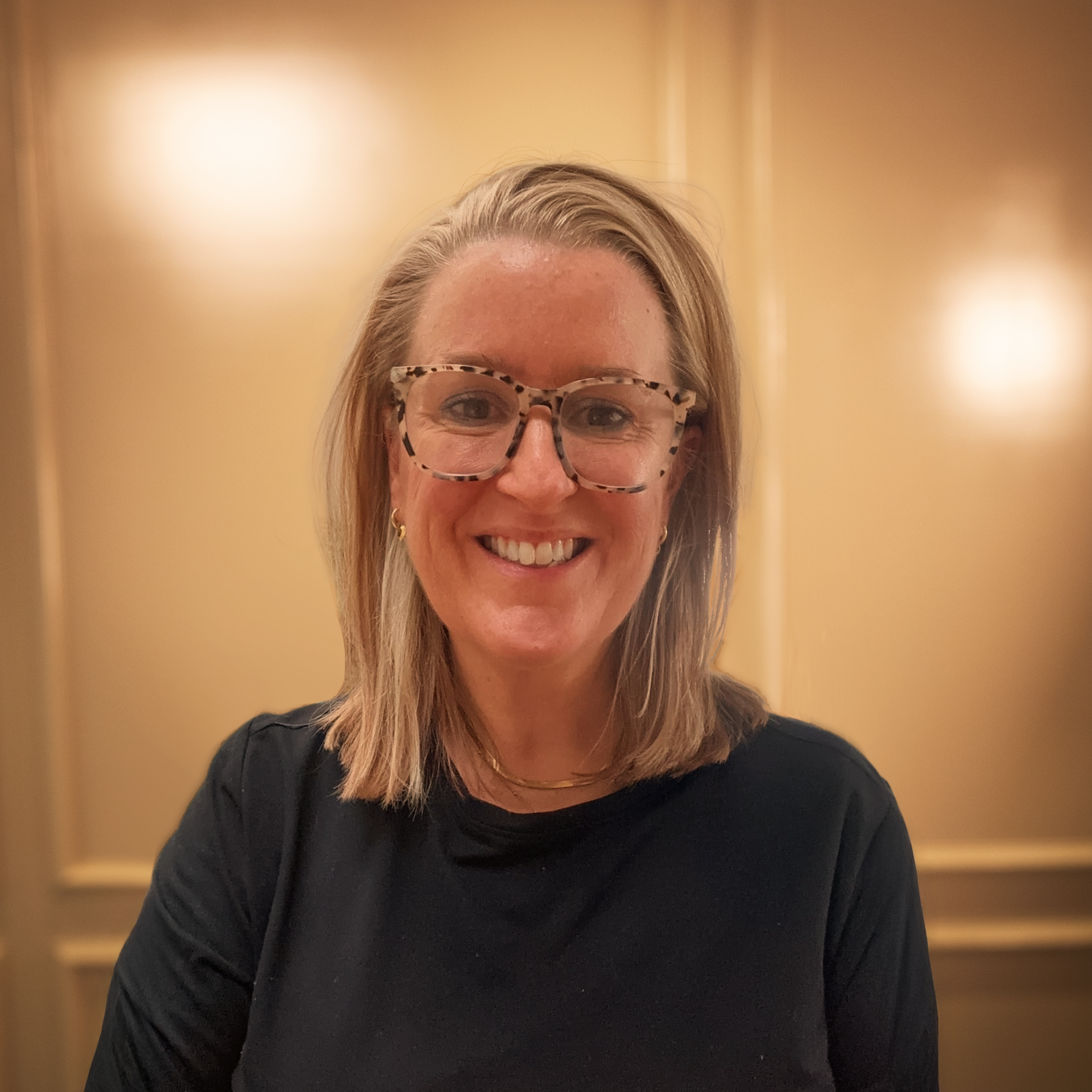
In this episode, we speak to Thaleia Efthymiadou, Commercial Lead at CyrusOne, specialising in data centre infrastructure. With a background in civil and structural engineering and a master's in sustainable restoration, Thaleia has carved a distinctive path within the built environment and digital infrastructure sectors. Currently playing a pivotal commercial role with CyrusOne in Germany, she's driven projects across multiple locations.
Watch this episode on YouTube:
Listen to this episode on:
You can read the transcript of the conversation below:
Sarah Davenport
I'm delighted to welcome Thaleia Efthymiadou, Commercial Lead at CyrusOne, specialising in data centre infrastructure, to this week's episode of Capstone Talent Talks podcast. With a background in civil and structural engineering and a master's in sustainable restoration, Thaleia has carved a distinctive path within the built environment and digital infrastructure sectors. Currently playing a pivotal commercial role with CyrusOne in Germany, she's driven projects across multiple geographies. Thaleia, welcome to the podcast. Thank you for joining us.
Thaleia Efthymiadou
It's a great occasion to meet you here, and I want to thank you for inviting me to Talent Talks. I'm very keen to discuss my career path, and it was a great opportunity to meet other talents and share different opinions. So, thanks a lot, it’s a great podcast for me.
Sarah Davenport
So, talk to us about your career. Tell us how it started, how you got into the space.
Thaleia Efthymiadou
I think that my career is actually driven by two main factors. The first one is my big love for maths. So already, from school, all my studies were focused on maths and physics, and this led to my decision to become a civil engineer. I completed five-year studies, as you described, in civil engineering back in Greece with a focus on structural engineering. And then I also did a two-year master's in renovation and rehabilitation of historical monuments and landscapes.
This actually was a really interesting change, let's say, from the core structural engineering to something that includes different disciplines like the restoration of buildings, because it gave me the opportunity to develop my teamwork skills. So, when you go for a restoration project, you have to discuss with the authorities, you have to liaise with the architects, and run a land survey. I also got involved with BIM modelling and 3D laser scanning of existing buildings. I believe it was a combination of knowledge and skills that I acquired at an early stage through my studies.
And then obviously the second factor that affected my career was the socioeconomic situation in Greece during the period that I finished my studies. So, I graduated in 2014 at a period where there were almost no new developments or new construction projects in the area where I come from in Northern Greece. And this, of course, impacted the effort that I had to put into things and career progress, but also motivated me a lot in studying the market and forecasting what the future needs were and obviously what I would expect from myself.
So, I finished my two-year master's in 2016 while I was working in parallel as an Industrial Lead Project Manager back in Greece. And then I saw that there was no salary increase, or there was no career progress. There was no major seniority or a major organogram to the projects because, actually, the projects were of a very small size.
So, I said to myself that investing seven years in studies was a lot, and so I wanted to be exposed to an environment with more opportunities, innovation, different job descriptions, and this is how London came up. I would say that it took me only three weeks to change country. So, I just started reading many, many job descriptions.
The markets are totally different. Even markets with similar size, like the UK and Central Europe, can have significant differences in the job descriptions and the skill sets required. And this can depend on the type of projects, the type of contracts, the size, the location, and, of course, the legislation.
So, I decided that I wanted to move to the UK and obviously the quantity surveying there, the RICS, the commercial sector is much more developed and more separate to the project management. While in other countries like Greece, the project manager also runs the commercial and contractual function.
That led me to move to London within a period of three weeks, and I took my first job as an MEP Quantity Surveyor. I think that my previous experience as Industrial Lead helped me because industrial buildings have a lot of underfloor cooling systems and complicated interfaces with insulations. I had an idea of the reports and engineering parameters that a project needs to meet.
And then, for me, becoming a Commercial MEP Quantity Surveyor was a very nice combination of my engineering background and the commercial sector, as I could dive into value engineering exercises and optimisation of projects through cash flows that were actually calculated by hand based on the actual programme. Logistics concepts, innovation, and things like that.
After spending then four years in London, I moved from an MEP quantity surveyor position to Berkeley Group, which was an amazing experience for me. I spent almost three years at St James and William London South. I had the luck to join iconic projects like the Prince of Wales Drive and Kingswood Park. I was the only MEP Managing Surveyor for St James and William at that time.
I had the chance to get involved in phasing strategies, energy phasing, to build all the scope of works with our MEP project managers and get to know all the details about sections and how we work on MEP contracts.
And then what made me move to Germany, I think it was more the discussions with contractors and my own willingness and my own dreams of always moving to a more innovative sector. So, it was five years ago approximately when I first heard about data centres, and I know I have already completed like five of them. But yes, only five years ago I got to know what a data centre is, and mainly from the big MEP contractors that I worked with.
So, when I was tendering, I was asking what other projects you have worked on, and they were describing data centres across Europe and so on. And then I said, OK, and why are data centres so important, or why is there such a development in this sector of the market, and why would I want to move to that sector?
I think it's the heavy MEP background obviously that adds a lot of value and demands to the profile and skill set of people to get involved with the sector. And then Frankfurt and Germany, I would say, is a major hub in Europe and Central Europe for data centres. If we compare it, we will say it's the London of Central Europe for data centres.
There was a high demand on commercial people here, and obviously working for a contractor, because I came here working for Mercury, which is a leading contractor on data centres, would give me exposure to trade packages, subcontractors, management and scope gap analysis and so on.
So, I’ve tried to give you a very holistic overview of my path, but if we would like to conclude it, I would say that it didn't really start from my graduation. It was a path that was built from my early years at school through maths and physics. And now it's here where we sit at CyrusOne as Commercial Lead.
Oli Coote
What an interesting pathway, Thaleia. And it's interesting to think that those sorts of moves that you've made, because you've moved countries and roles and all of those sorts of things, it's quite common for there to be other influences along the way. And sometimes those are people, sometimes those you mentioned even the economic situation in Greece at the time, that kind of led you to sort of think about maybe other opportunities and things like that.
Beyond those sorts of things, were there people along the way, you mentioned talking to contractors and through tendering processes and learning about data centres and things like that. Are there any sort of forms of influence along the way that helped to take some of those leaps to different countries and different sectors?
Thaleia Efthymiadou
Yeah, that's a really nice question because it's always important to have some reference points in our career. Yes, I would say that I was mostly influenced by my first employer in Greece, as it was a relatively small company. My relationship with him was very close, and he was a kind of mentor to me.
He had two main characteristics. Efficiency. So, he was pushing me to make calls and never leave a meeting or a room without a decision or a handshake made. And the second one of his characteristics was that he was very success-focused, and success doesn't always mean money or a more senior role. It means that we learn something out of our position, out of a meeting. There's always a nice lesson learned out of each process.
So, this mostly drove my decisions on my career paths because I always wanted to learn through my roles and I wanted to be efficient. And this is what then drove my skill set as a leader because obviously at the first paths of your career, you're an engineer, you're a quantity surveyor. Then once the umbrella of management opens and you develop, I started focusing on my soft skills and strategies and keeping people happy, giving opportunities, how I would like to be treated and so on.
And then yes, as you mentioned, the second part is the market and what others are doing. So, for me, it's important not to compete but to remain competitive. I always check on LinkedIn profiles of people that I would like to be like or these cases that I would like to adopt and develop. And I try to take all the necessary actions to be able to develop myself.
And as part of that, it was also the conversations with the contractors and the subcontractors. What are they doing better? How do they keep their cash flow for their businesses? Because at the end of the day, on the personal level, we are all a small company. We are a small organisation. We have our workflow, our personal workflow, we carry our culture. And then we have to fit into this society, in this working environment and develop with it and give and take the best out of it.
Sarah Davenport
What have you found in terms of the differences and the changes of nuance from working in the contractor and the subcontractor space to then working client side, on the residential side, but also on the data centre side? Have there been any significant differences that have benefited you or that you've found particularly challenging between the two different types of organisations?
Thaleia Efthymiadou
I think that both experiences are fundamental. And if I could give personal advice: mix experiences, try different types of projects, try different roles and companies at the early stage of the career, because each company, each organisation, each project has something to give you.
On the contractor side, obviously you go more into the detail of things. Even as a commercial person, you need to understand about engineering and drawings and processes because behind each cost, there is a quantity and the rate and the subcontractor and obviously the skill sets for management of multiple disciplines is developing because when you're on the main GC and you manage, let's say, 30 subcontractors for a big contract, it amounts to 100 people, let's say 150.
And then, on the developer side, I would say that yes, I'm leading the teams, but I also have the space to develop strategies, review contracts, take ownership of improving processes, and see myself grow through my own role. So, to be more focused on what I want to achieve through my role on a personal level and as a leader.
So, in conclusion, I would say that working for a GC is very valuable and fundamental, especially for the early stages of a career. It can give so much knowledge, and then jumping to the developer side gives a more holistic overview of things, gives the opportunity for more leadership, innovation, strategic decisions and so on.
Oli Coote
And do you feel that you're then in a stronger position where you are currently, because of that experience previously? You understand that context. You understand what their problems are, what their pinch points are, their challenges and what they're probably looking to try and achieve. And understanding that, then, from the other side of the fence, now puts you in a place where you can use that constructively.
Thaleia Efthymiadou
Yeah, exactly. And this is something that I was always mentioning to myself: do not rush to change jobs for a better salary, or for a fancier position, or for a more senior position. For me, the first ten years of a career are critical for knowledge and skill sets build-up.
So, I would advise graduates to go for the role that gives you more skills, and then opportunities will come, because there are opportunities out there. The most important thing is that we are able to manage the situation at any time and to maintain our quality and satisfaction with what we are doing, which first comes from us. We set the ceiling for our expected quality of work, and for me, that's always a priority.
And yes, as you mentioned, having the GC experience now not only gives me technical knowledge and the ability to manage better variation accounts, but it also comes to empathy and understanding, trying to wear other people's shoes, to fit in others' shoes.
There is a lot of pressure when you work on the general contractor side, and we have to show understanding, to be supportive, to try to improve processes, communication, agendas and from a client-side point of view to make the teamwork more efficient.
Sarah Davenport
It's interesting that as you've moved into leadership and, I follow you on LinkedIn, I can see leadership and leading with empathy are real subjects that resonate with you. Did that come naturally, or were you mentored through that transition? How easy did you find it to move into that leadership position?
Thaleia Efthymiadou
I think it comes naturally when I self-assess my career path, and what I would like to become. And in an environment with so much multicultural background and when we expect people to be efficient, the number one priority is to make them happy at the workplace.
So, in reality, my priority is not whether the answer that I will give is always correct. I try to give correct answers. What is important to me is that I respond to messages and emails as soon as possible to ensure that the other party feels supported and not ignored.
I think it's something that comes naturally from our own needs and realisation of how I would be more efficient throughout this career path. And obviously, I had the chance to have excellent leaders, and I found empathy and support. And yeah, even when I moved here from the UK, my director back then picked up the phone. He spoke to my director in Germany; he gave a good referral and things like that. So, I always try to pick up the positive attitude, how I would like people to behave and manage me, and try to be on that path.
Oli Coote
Yeah, it's that collaboration. You think back to what you mentioned in Greece when you were working there, and that idea of teamwork that was ingrained in you there. And I guess you know where you are now, it's that teamwork, that collaboration. But, looking at it through that lens of empathy, putting yourself in other people's shoes and using those sorts of skills to try and work collaboratively together to bring the best out of everybody.
Thaleia Efthymiadou
Yeah, exactly. That's it. It's empathy and collaboration. Because in reality, there's no perfect skill set, and we are always a team. And as a leader, I'm there, trying to identify strengths and weaknesses, and to be there to support the team on the gaps and weaknesses, not to micromanage or to blame.
So yes, when we collaborate, it means that we work together to deliver, but we also work together on imagining everyone's future and how he or she would like to drive himself or herself to that future.
Oli Coote
And the other thing you mentioned before was about that measure of success being about learning something. And I would imagine again, now in the DC space, with the pace at which things are evolving, the deadlines you're up against, and the challenges that are thrown at you along the way. Again, I imagine that sort of mindset where you have to be a problem solver, look for the solutions, and be curious as to how you might be able to find that, and again, work with the team to do that.
From a technical skill set, if you put that to one side for a moment, having that inbuilt as well, I imagine, is an important thing.
Thaleia Efthymiadou
Yes, 100%. The answer to this question actually goes back to and links many different points that we made during our conversation. So, when I was a kid, my dad used to crop an article form a newspaper every day, and he was asking me to read it, to understand and take as an outcome a brief outcome with me.
This is something that I never stopped doing until now. So, every day I define two or three subjects that I'm not 100% clear on or a technical definition. For example, what is a COP or a CPT? If I go back home, I take 30 minutes, Google, read, and open a drawing.
So, the knowledge doesn't have a cap. We learn every day and for me homework doesn't mean that we spend all our free time on work, but doing some homework with coffee, especially at the early stage of the career, it's critical because sometimes during work, we just want to deliver. We jump from one call to the other, while in reality, 30 minutes a day, 20 minutes a day reading something or even translating something, because now I work in German sometimes, it adds something to the process.
Sarah Davenport
That's an incredible way to hone somebody's thirst for knowledge and ability to kind of cut through unknown subjects that you can really form so early on.
That's making me feel very inadequate as a parent. I think I’ll pick up a newspaper on the way home!
Thaleia Efthymiadou
I think this was my parents' way to mitigate my non-willingness to read books because sometimes people who are really addicted to maths don't like reading books. So, they had to kind of balance it out.
Oli Coote
It's a good tip because, my son seems to be leaning in that direction. So, I'm going to write that down.
Thaleia Efthymiadou
It’s something that, actually, when I have a graduate or a person that I'm trying to work with as a mentor, is something that I always adopt in the development plan. Every week, I give two terms, or I share two websites with them: go and read these, check about this new announcement or things like that. Like a study exercise.
Sarah Davenport
It gets you looking outward, doesn't it? So, that's why, if you're talking about things like empathy, it's more readily available because you're already used to looking at things from lots of different perspectives.
Thaleia Efthymiadou
Yes. And at the end of the day, we don't all have access to the same exposure, to the same experiences and sources of knowledge. I think that if I could give advice, it's that: share your background, knowledge and skills and then even one good thing that will be returned to you, it's an addition to your own skillset.
Sarah Davenport
Yeah, for sure. And have you been involved in much mentoring?
Thaleia Efthymiadou
I have been involved, yes. I mean, but not on a very wide group, obviously, on direct mentoring. I had some assistant QSs in the past, and currently I'm mentoring, or I don't want to use the word mentoring because I'm coordinating and I'm trying to develop strategies and efficiency with our consultants and our teams.
Yeah. So, I'm always the person that will ask questions, will raise the hand and say why don't we also look at this?
Sarah Davenport
Brilliant. We run a mentoring program at Capstone, and we are nine months into our first mentoring program, which is a 12-month program. And then I'm just getting the second cohort. So, I might get in touch with you about whether you want to get involved in that. It’s great as a mentor, it's great as a mentee so that everyone can get something out of it. I may well tap you up around that.
One thing that I was keen to understand from you is, from hearing that the traditional STEM subjects obviously came very naturally to you. They obviously don't come naturally to everybody. But if you're looking at this through the lens of somebody in the really early stages of their career or before they've even started, and they're in the latter stages of their education, how would you describe the opportunities that a career within data centres can offer them?
Thaleia Efthymiadou
For me, the data centres sector has many disciplines and a very wide range of roles. We can start from sales and land acquisition, which is the early engagement. Of course, we need data centre experience, or we need to interface with power, fibre and so on. And it ends with the operation of a data centre.
From that stage, design is involved, cost management is involved, contract management is involved, and project management is involved. All the construction sectors are involved. I would say, especially big companies like CyrusOne, are very open to society, and they run programs. We bring the local residents and people living in general closer to the data centres. We explain the functions.
We have open days where the residents can visit the live data centre, or we hold some events on sites explaining the construction stages and what the data centre will bring to the local society, such as new jobs or opportunities for green energy, like district heating or sustainability.
I think that we are definitely making steps to come closer to society. So, this means that parents will also discuss with the children, hopefully, about this new sector or data centres, which is actually not that new. It's just that we started maybe being more open and discussing it in conferences more now.
OK. So, I think that's from the parents and the children. It also goes to schools and universities, or all the way around. We also see that in big conferences; there are associated awards for new talents and new engineers. And of course, universities also play a critical role.
So, when a PhD position opens or when the professors pick up the subjects for master’s theses and for the graduation theses, data centres could be an example of a project. Where in the past it would be a house. Then, after the house, it would be a rail. After the rail, it would be a high-rise residential. Now it could be a data centre.
And I would give you an example of that. One of my master’s thesis articles was related to thermal analysis and fire analysis for different types of masonry support and different types of walls on historical monuments and structures. This is actually a subject that can be easily transferred to data centres, from a CFD analysis, external, internal and so on.
So just to conclude again, I would say that it's important to explain to society what a data centre is. And then the rest will naturally come because we have very good engineers, we have very good universities, and then people will start picking up this as an idea for future results and development.
Oli Coote
I think it's slowly but surely getting better, isn't it? As you say, CyrusOne is doing great things with the local communities and things like that. And so are other developers and operators. And I think, more broadly, this podcast and plenty of other platforms as well, are doing more to kind of talk about data centres, and make it more of a visible thing, alongside everything that's going on in the media.
And I suppose equally, you're working on live projects at the moment to add to that awareness as well. What are you excited about over the next few years? Are there things that you're working on at the moment where you're there day-to-day? Are there things you're excited about over the next few years that you can see coming down the line?
Thaleia Efthymiadou
Yeah. I think I'm excited about how we manage demand and capacity, and this is linked to also keeping our existing talents, bringing more talent, maintaining the current manpower, but also being more efficient on our strategies, phasing, payment runs, and all the processes that can impact satisfaction.
Because the decision to remain in the sector doesn't always come down to salary or a good package. I think especially after COVID, and I include at least myself; we all care about more work-life balance and having a sustainable work environment, stability and so on.
So, for sure, the one part is that I'm trying to work on the resourcing strategies and having effective deliveries and a good supply chain. But on the other hand, we all have to become better at leadership and empathy because when we are happy and when we want to work together, then we will maintain long relationships, and we will not have massive waves of movement between the sectors. We will maintain the skills, and we will not have to train and then lose the skill set, and then retrain someone.
Sarah Davenport
I think that's the perfect summary for the industry, in terms of the outlook. And actually, the podcast that we just released this week, it's Sophie Parker over at Pure Data Centre Group. And she said exactly the same thing, that it's not just the attraction strategy, it's the retention strategy. Otherwise, you've just got a revolving door.
So, I love that summary of the conversation, and of this whole conversation, because it’s: look after the teams that you've got as you attract more in, because if people are feeling happy and fulfilled in their roles, then they can do great things.
And you've been a brilliant guest to show and highlight to people the range of career development and opportunities, whether it's by geography, by discipline, or by sector that the data centre world can offer somebody.
And I'm really thankful you took the time to talk to us. Thaleia, thank you so much.
Oli Coote
Thank you, Thaleia.
Thaleia Efthymiadou
Thank you, it was a pleasure.
That was an insightful conversation with Thaleia Efthymiadou, Commercial Lead at CyrusOne. Her career, spanning civil and structural engineering and a master's in sustainable restoration, provided an invaluable perspective into commercial leadership, project management, and driving projects across multiple geographies. Thaleia is clearly leading the way in balancing resourcing strategies and an effective supply chain, with the need for better leadership and empathy. Her commitment to maintaining long relationships and skills retention is helping to transform the sector’s approach to talent. We are extremely grateful to Thaleia Efthymiadou for joining Sarah Davenport and Oli Coote on Capstone Talent Talks.
Related Insights
\\