


Talent Talks: Matthias Haymoz
Introducing Talent Talks, the podcast where we dive into all things talent in the real estate, construction, and infrastructure world. From the boardroom to the building site, we'll uncover the stories, insights, and people shaping our industry today. We shine a spotlight on data centres, one of real estate's fastest-growing and most in-demand sectors.
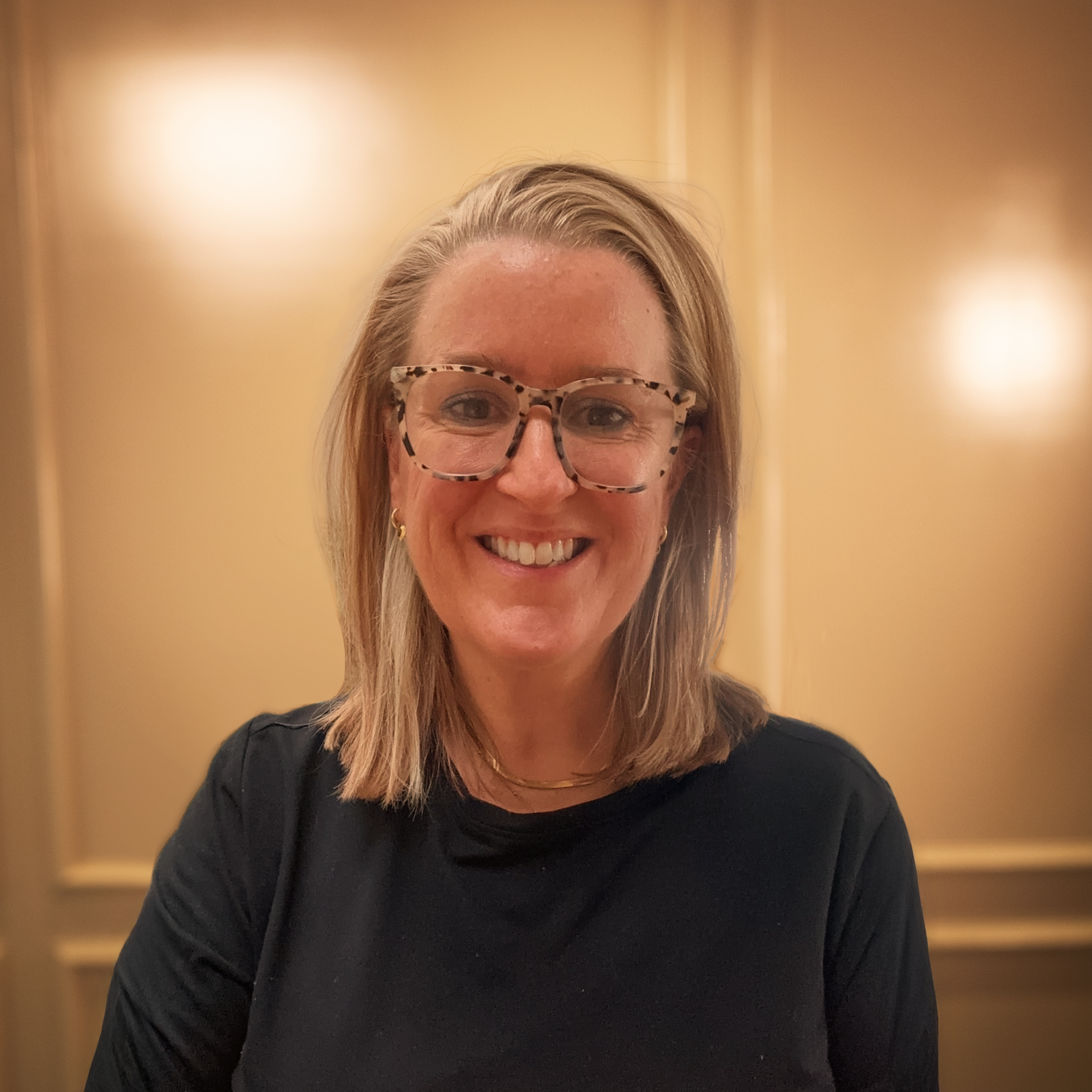
In this episode, Sarah Davenport & Oli Coote are joined by Matthias Haymoz, Project Manager at the Swiss Datacenter Efficiency Association (SDEA), an organisation dedicated to the principle that sustainability must be proven through data rather than simply assumed through marketing. Throughout the discussion, Matthias shares his unique journey from journalism to the heart of the "moonshot" topics of AI and sustainability. He provides a transparent look at the evolution of the sector, challenging the industry to move beyond "token green credentials" and embrace holistic strategies that prioritise long-term profitability through genuine efficiency.
Watch this episode on YouTube:
Listen to this episode on:
You can read the transcript of the discussion below:
Sarah Davenport
Today on Capstone's Talent Talks podcast, we are joined by Matthias Haymoz, Project Manager at SDEA, the Swiss Datacenter Efficiency Association.
Under his stewardship, the SDEA has championed the idea that sustainability in data centres must be proven and not assumed. Today, we'll dig into Matt's views on what true data centre sustainability looks like, how the industry must evolve beyond token green credentials, and what holistic strategies actually work in a world racing towards ever greener and greater computing demands.
Matt, lovely to have you. Thank you so much for joining us.
Matthias Haymoz
Great to be here. Thanks so much for having me.
Sarah Davenport
Talk to us about your career. We always focus on the person initially and find out how on earth you ended up in the data centre world. So maybe you can give us a rundown of your career.
Matthias Haymoz
How much time have you got?
Sarah Davenport
Oh, all the time in the world.
Matthias Haymoz
OK, good. So, for starters, I'm not a big career guy. I never had a career plan. I never had any idea where I'd be in 5 years. So, it's a total coincidence that I landed in the data centre industry.
I originally, after school, wanted to study economics, but then, coincidentally, found a job as an intern at a local radio station and ended up working in journalism for 15 years, first in this local radio station from intern to editor-in-chief, then went to the public broadcasting company. I worked there for 7 years, and then in my mid-30s, I thought, “OK, what do you do with your life?” I’ve had 15 years in journalism, and it was always good fun. But I thought, what else can I do?
And then I switched cities in Switzerland, moving to Zurich, where I looked for a job. I made the obvious switch from journalism to communications, worked for a global strategy consultancy, built a communications department, and took over marketing. And in the last 2 to 3 years, they call it “moonshots”, the main topics of this company to sell projects to clients were AI and sustainability, and that's kind of what my first touchpoint was with those topics, of course, then from a business perspective.
And when I thought I needed to do something new, something maybe more meaningful, AI and sustainability stuck with me, stayed with me. But it was a total coincidence that I found SDEA. They were looking for someone like me to drive this, and now I'm still in the AI and sustainability world, but from a different perspective now, with the focus to make sustainable AI or make AI as sustainable as possible. That's about it.
Oli Coote
When you made that transition, at the advisory firm and then at the consultancy firm that you were at before, was there a huge amount of support there at that point? Because you're going from the broader communications piece and then actually working on these “moonshots” to do with AI and sustainability. Was there a lot of support in-house for making that transition? I’m sure you had prior knowledge from your own interest, but did you have support from a learning and development perspective?
Matthias Haymoz
I would say yes. I mean, the previous company is one of the world's largest consulting companies. They have a huge apparatus of thought leadership people, of research people. So, you basically have the knowledge of the world at your fingertips. We have a great portal with insights with data, with facts, so that certainly helped to build some knowledge around the topic. Again, more from a business perspective, like what can companies do with AI, how can they implement it? How can they get more efficient, more profitable?
And when it comes to sustainability, there was a great sustainability team globally working on all things biodiversity, energy efficiency, which we're going to talk about here. So, I would say yes, I was lucky to work for a company that really had the means, really had the people to build a huge research and knowledge hub around the topics that we then ultimately had to convince clients that they're the right topics or the important topics.
Sarah Davenport
And what drew you in? What was it that got you interested? Because you've had a really interesting career before on the communications side. Was there, or maybe there isn't a massive interest, but I assume that most people, when you're working for an organisation like SDEA, there's got to be an element of passion there. So, what drew you into the sector?
Matthias Haymoz
Data centres are, I think, the fastest-growing industry worldwide. It's a huge booming sector, and we're all responsible for that. I mean, we're talking through a data centre here now. This call is going somewhere we don't know where, through a data centre. I have a smartphone. I work online all the time. Data centres are the backbone of the world we know today, and also the world I grew up to live in and love. So, they're the basis of everything.
But then there's the sustainability aspect, which is also a large topic. We only have this one planet, and we need to make sure that although we need all this data, we need data centres to make sure that we can combine these two in a way that we're not putting the future of our children in peril. I think it's a highly interesting combination that I really love.
Sarah Davenport
So, tell us what SDEA is doing around that? What's the mission?
Matthias Haymoz
In simple terms, we certify efficient data centres. It's important to distinguish: we don't certify data centres for efficiency, we certify efficient data centres. The most efficient in the world can get a badge of honour from SDEA that they really are efficient.
If I have a minute longer, we're basically trying to solve one of the biggest challenges in the industry, and that's, as we said, sustainability is becoming more and more important, especially with the growth of data centres. But most sustainability metrics out there today, or sustainability reporting, are still largely based on voluntary reporting, on self-declared numbers and isolated KPIs. And it creates this gap between, let's say, sustainability messaging or the marketing that certain companies have and actual measurable proof. And that's what we're trying to change in two ways.
First of all, with a certification for data centres that's based 100% on measured and validated efficiency. We don't certify net-zero pledges or energy management projects or whatever promises to be carbon-negative. We only certify real efficiency and emissions.
And also, we created an integrated index, like a comprehensive view of efficiency. So not just a data centre as a building with four walls and that's it, but also a data centre as a server, storage, and network. How are you utilised? Also, the CO2 footprint of a data centre, and soon we're going to include water in those measurements. So, we have an efficiency index that looks at the data centre as a building, the IT, its CO2 footprint and soon also the water utilisation to have one integrated index that really measures data centre sustainability in a comprehensive way, as opposed to often isolated metrics that look at this part, this part, this part together.
Oli Coote
So, can that be more challenging for a legacy data centre, one that's been up and running for a while in terms of how well that can meet any of those metrics just by virtue of the fact of how it was constructed in the first place, as opposed to those that are being designed and built at the moment? I'm imagining there are some challenges with those legacy DCs, and can they evolve to improve that, or are there just restrictions in place that make that too challenging?
Matthias Haymoz
Absolutely right. Of course, if your data centre is 20 years old, there's never been any kind of retrofit, it's going to be hard to compete with the new, modern, efficient data centres out there. That said, one of the first data centres in Switzerland we certified was the data centre of our national telco provider, Swisscom. It's one of the oldest data centre buildings in Switzerland. It was built, I think, in the 60s or the 70s. It's an old, massive and protected building, but it's one of the most efficient data centres because they did invest at some point, refurbishing everything, retrofitting everything, modern cooling. So yes, it's of course possible.
But on the other hand, I mean, if you do operate a 10- to 15-year-old data centre and your efficiency is far off what's considered efficient today, then we don't feel bad in telling you that you're not going to get a certification, because your operations are not efficient. It's not that we're saying you're doing it wrong or it's bad. You don't get our label for efficient data centres. You can still be highly profitable and say it's OK, I'll leave it for 5 to 10 more years, everything is still up and running, and then I'll look into investing in whatever.
Oli Coote
So, it's part of everyone's strategy, isn't it? I suppose in terms of the Capex, it's that we've got to try and put this into retrofitting legacy DCs, but we've also then got to put that into the design of future projects. I mean, there are a lot of great things happening out there, aren't there?
Matthias Haymoz
But also, what we see is that when building new data centres, operators or investors, most I guess colocation data centres today are somehow owned by investors, are still not focused on the sustainability or efficiency part. Really, we have a great client in Switzerland, a colocator. They certified the whole campus, 3 data centres, and they all have a gold level, so they're the most efficient data centres to be certified. They're soon going to build a fourth data centre right next to the three, but their engineers are telling me there's no way this thing is going to be efficient because the decision on what to build, how to build comes from our global headquarters. They're in the United States, and the mantra is to build as fast as possible, as cheaply as possible, because we need the space.
So, we're still seeing, and I don't think this is an isolated case, that it's more about growth, it's about profit and less about maybe investing a little more, but building a smart, efficient data centre that actually meets the highest standards of best-in-class efficiency today.
Sarah Davenport
Yeah. So, the corporate push is around, the driving motivator as it were, is around profitability with efficiency secondary to that.
Matthias Haymoz
I don’t want it to be misunderstood; it's not wrong. I mean with data centre operators, it's a business for them. Of course, they want to be profitable, absolutely. What we're trying to push is the narrative that if you invest a little more in the beginning and maybe it takes a little longer to build, but you take the efficient materials, you take the more expensive stuff, the return on investment in 1 to 2 years will be much higher than if you build cheaply.
More efficient means less waste. It means when you talk about IT, fewer servers, less energy consumption. It all saves you money over a certain period of time. Of course, not right when you invest. Yes, you might have to pay a little more, but the return on investment is there. So, we're trying to push the message that sustainability and efficiency don’t mean less profitability in the long run. In the short term, maybe 2 to 3 years, you have a little less money in the bank than you would have if you had built cheaply. But over time, it's more profitable to build efficiently and to use those good materials.
Sarah Davenport
And who's a brilliant example of showing that profitability, sustainability, and efficiency aren't mutually exclusive? Who would you say is doing it really well?
Matthias Haymoz
I don't have a name on top of my head, but there's many, many great examples of data centre operators or also large cloud providers who just rent space in a data centre that really try to go beyond, let's say being compliant just to the minimum, so you don't break any laws, but really try to do good things.
Over the years that I've been in this industry, I've seen some fancy, cool ideas like using waste heat from a data centre to heat a shrimp farm. It might be anecdotal, but it's just let's try to do something with it. Or there are green data centres, not as in green energy, but they actually have a green roof, and they're planting plants on there and vegetables for their employees.
So, there are super, super cool ideas, which of course are not a business case. But there are good ways of making sure that we make those data centres, which are often not very attractive, a little more acceptable also to the larger public.
When it comes to the business side, again, I don't have a name on top of my head, but I think anyone who does this exercise honestly about efficiency, seriously about reducing energy, will see pretty quickly how much just 1% reduction in energy will lead to when it comes to costs. Especially in Switzerland, we don't have the cheapest energy prices, and a data centre quickly uses gigawatts of energy over a year. You reduce this by even 0.1%, you're talking tens or hundreds of thousands of pounds, francs, dollars, whatever, pretty quick.
Oli Coote
Yeah, I mean, we've obviously got that challenge in the UK, regarding the cost of energy as opposed to say the Nordics, for example. And I suppose one could argue in terms of how efficient some of the data centres are, perhaps in the UK versus in say the Nordics. I'm sure there are cases on both sides where some are more efficient than others, but you're right, if you can bring some of that bottom line down from energy spend, that makes a massive difference. So that alone is obviously something that, from a business case perspective, is something to strive for.
Matthias Haymoz
And that's just from a building perspective. As I said, we also look into the IT, and the IT is a little, let's say, different because a data centre operator has no insights into the IT. It's their clients' IT, it's banks, governments, pharma, SMEs, you name it.
But the biggest I think savings potential is in the IT. The global average server utilisation is estimated to be between 12 and 18%. Twelve and 18, not 80, 18. So, there are massive IT stacks that are over-provisioned and under-utilised. If you have 1,000 servers and they're running at 10% capacity, if you can just optimise that to like 40%, imagine if you can get rid of 500 of your servers. 500 servers times average enterprise server 10K, that's already 5 million, and that's without the energy you save, licences, software and everything.
I think the IT is the biggest savings potential in a data centre. But often, when we talk about data centre energy efficiency, the IT is excluded because it does not belong to the data centre operator. So, we're still kind of thinking in those silos in the industry.
Sarah Davenport
And how do you, as an organisation, approach this? Because obviously, you have a certification. How many certifications are there? How many data centres have your SDEA certification?
Matthias Haymoz
Since we started, we’ve delivered 10 SDEA labels, 10 certifications.
Sarah Davenport
Wow. OK.
Matthias Haymoz
It's a small number. There are two ways of seeing it. I mean, as I said, we do certify efficient data centres. You have to prove your efficiency with a full-year measurement. So, it's by design hard to get this certification because it's based on real and validated data. But of course, there are many more who absolutely would qualify for this certification that are hesitant because it forces them to be transparent, to not just talk about their efficiency, but actually prove it with measured data. And that's where many are still hesitant.
Sarah Davenport
And of those 10, are they all in Switzerland?
Matthias Haymoz
Switzerland and the EU. We started in Switzerland, the first 2 years when I was here were basically only Switzerland. Then we started to go more and more international because we realised that we're solving a problem that's not a Swiss problem. Our KPIs are universal, and data centres are built similarly in different countries. So, we started going international, and now we've certified the first data centre in the EU in Luxembourg this year and have, let's say, certifications in the pipeline in France, Germany and the Netherlands.
Without forgetting our Swiss market. There’s still the most data centres that are currently in certification in Switzerland.
Oli Coote
And presumably, there's a lot of buy-in from the European Data Centre Association, and bodies like that, from the work that you're doing?
Matthias Haymoz
You would think so. What we realised is that it's two things. The first one is Switzerland is kind of an island when it comes to data centre regulation because there's none. There's nothing compared to the EU, which has the Energy Efficiency Directive. There are countries like Germany that have very strict PUE limits. I'm not sure about the situation in the UK, but I think there's regulation in place or coming or plans.
Switzerland has nothing, so we started in a country that is not regulated with the idea of getting the operators to be proactive about sustainability. Now, when we talk to the EU, especially European operators, there are many who tell us, "Hey, look, I have so much to do just to be compliant with all these regulations here. I have no time, no resources for anything that goes beyond that. As good as your work might be, I simply can't right now."
And then there's also the side, mostly associations that say, "Look, we need to work with standards, we need to work with international standards, ISO and EN to make sure everyone's on the same page." And we do differ from those standards in that we created an integrated index. For example, when we talk about the building efficiency, we take a standard that's called power usage effectiveness, PUE, but also include heat recycling in that, including on-premises renewable. So, we kind of have our own, not standards, but our own way of measuring efficiency. And when it comes to IT, we have a completely proprietary index because there is none.
There's the side "we don't have any resources for what you guys do," there's the side "we love it, but as long as the standards are here, we need to adhere to them," and then there's a small part that says, "what you do is brilliant, let's work together."
Oli Coote
In some countries, for example, that baseline of compliance actually is quite efficient. You know, depending on the regulations that are in place there. So, say Germany for example, their baseline of compliance could be efficient in terms of your metrics and standards.
Matthias Haymoz
Yeah, absolutely. I mean, Germany has the law that dictates PUE limits, which we think is a bureaucratic monster. I don't think anyone's happy with it, but it dictates PUE limits. I think it states that for new data centres starting in 2026, you need to have a maximum PUE of 1.3. That's already very, very efficient and hard to reach, especially for a new data centre. I believe the law says you have like 2 years to fill up your data centres, but that's very challenging.
We talked to a large company in the financial institution sector in Germany. They said, "We currently have our own data centre for security reasons. We want to have things in the house, on premise, but the data centre is around PUE of 1.8, 1.9." And he said, "According to the law, in two years I have to get it down to 1.6, which I'm not going to reach with this infrastructure. So, I would have to build a new one. But then I have to have a PUE of 1.3 with a new one. That's even more unrealistic with what I'm running in the data centre." So, there are challenges in the industry that will have to be solved somehow. Even though, yes, the baseline is very, very efficient.
Sarah Davenport
So, if you think about that, obviously you've got the traditional Flat D markets, what are your views from an efficiency and sustainability perspective about the emerging markets across Europe in particular, which is obviously more relevant to you than maybe some of the other emerging markets? From an efficiency perspective?
Matthias Haymoz
From an efficiency standpoint, let's maybe talk sustainability, because you can build the most efficient data centre in Saudi Arabia; it's no problem. But from a sustainability perspective, it is smart to build data centres where you have low-carbon energy, which typically is the Nordics, where it's cooler, where you don't need as much energy to cool. From a sustainability perspective, that's where data centres should be. The Nordics, what is it, the Nordic Circle, that could be Siberia, Russia and the Nordics, Canada, are highly interesting from a sustainability perspective.
Building a data centre in, I mean, Dubai, Qatar, the Emirates are coming big with AI, with data centres. Are they really going to be efficient? Maybe yes, but good for the planet by the amount of cooling that is needed in a 40-degree climate? Not sure about that. Cool climates, renewable energies, make for data centres to be less polluters than they already are.
Sarah Davenport
And do you do a lot as an organisation around education? And by education, I don't mean that in a patronising way, but literally education and informing the data centre sector about what efficiency and sustainability really mean.
Matthias Haymoz
Yeah. You could argue, going back to the few certificates we've delivered so far, that we are basically running a subsidised market education campaign. Yes, with this comprehensive approach that we have and trying to get the industry to not just look at the data centre as a building, but also the IT and where energy actually goes, we're running an education campaign.
Yeah, we're speaking at many events, and have talks afterwards with people telling us, "Wow, that's a really cool idea that you have. Never thought of that." So, we really are kind of running an education campaign. Not when it comes to the data centre side. I mean, a data centre operator can get just the building certified by us. They know what they're doing. They know their efficiency. They have their metrics. And data centre operators, they are mostly optimised for efficiency, simply because for them, energy is money, and they want to spend as little money as possible. But when it comes to IT, there's still a lot to do and a lot to educate, absolutely.
It's starting to shift now. The first data centre conferences we went to, and by data centre I mean data centre building conferences, there's the cooling company there, the security door, the raised floor, the builders, they're there. When we talked about IT efficiency, they looked at us like "what does IT have to do with what we're doing here?"
On the other hand, you go to IT conferences, and you talk about data centre efficiency. They tell us, "Hey, my colocator is right there. Talk to him.” So, we do try to educate the market that a data centre is not just a building, it's not just servers, it's the whole thing combined. Let's try to break up those silos and work together so we can achieve real efficiency.
Oli Coote
And sort of given the pace that things are moving at the moment, and obviously the demand, and everyone's trying to build data centres wherever possible, sometimes they've got power and so on and so forth.
But I mean from a talent perspective and from your side of things, you're looking at efficiency, you're looking at sustainability. What are your views on how developers, operators, can adapt or maybe not adapt, but with regards to who they're bringing into the organisation and where maybe they need to focus a bit more time and effort and where those people might come from. Given your experience over the past few years, what are your thoughts on that?
Matthias Haymoz
I don't have a particularly qualified opinion on that. What I hear, though, from operators is that there is a talent shortage already. There's a huge run for talent in the data centre industry because the industry is growing so fast, and because people are lacking. What I would say, what we see is the companies that we work with that are honest about sustainability, about efficiency, that want to drive this topic, what they have is great talent in engineering, great engineers that know the pipes and the pumps and ventilations or whatever, that know how to optimise the infrastructure to really get it, to squeeze out this additional percent of efficiency. I think that's what's needed the most.
These are really people who know the ins and outs of engineering and are good with their hands, with planning, building. That's what I think will be needed, or that's what will help the industry the most. What is needed is probably anything between engineering and simple operations management. You know, many people to keep the data centre running, to do maintenance here and there. But I think good engineers, not just in the data centre industry by the way, you know better than I do, I think are hard to find these days.
Oli Coote
Yeah. So, I suppose it's that link, isn't it? Between the overarching sustainability ethos, policy, whatever it might be within that organisation, and those that are involved in the design process, those engineers who are actually making that happen, they turn that into reality and try to balance those two so that they're more seamless.
Matthias Haymoz
Yeah, I mean, I guess the natural answer in my position would be that data centres need sustainability people more. But they can't do anything if they don't have the engineers down there to actually know what they're doing, how to do it, how to optimise for efficiency.
Oli Coote
And I think there's more that's being broadcast, in terms of the good things that are happening from sustainability perspectives and efficiency and so on. We talk about some of those things with regard to shrimp farms. I think more of that is becoming a little bit more known in the wider public or certainly, I suppose people like us, that are involved in DC, we seem to hear a bit more about that now, which is great.
But those companies could maybe do a bit more in that area as well to get that message out there. So that narrative spreads as well. So that, the general perception more broadly is that there are good things happening, actually, from a sustainability perspective, clearly not everywhere, but in lots of instances. And that also may bring people into the sector, where it’s one of their key strengths or areas of interest.
Matthias Haymoz
And the waste heat discussion, by the way, is also a great example of why data centre sustainability is not only the data centre's job itself. We have many clients we work with that are able to recycle their waste heat and would even be willing to give it for free. But a data centre ends at the system boundary. If there's no one taking the waste heat, no one wants it. If there's no utilities company that's willing to build the pipe to lead this waste heat somewhere where it can be used, there's only so much a data centre can do.
And you could enlarge this topic to municipalities, to planners. They're already responsible for making sure data centres are built in places where it makes sense, not maybe on a greenfield next to a chicken farm because chickens only need so much heat, but actually build them where the waste heat can be used. To embed data centres in a, let's say, broader planning picture to really make sure they can be not just energy consumers but also heat generators, mostly carbon-free heat generators. And also in the future, maybe even grid stabilisers. When there are grid fluctuations, data centres with new batteries can act as a kind of stabiliser for the grid. There are many ways or many things still to do.
Sarah Davenport
Yeah. And the Nordics do that pretty well, from my understanding. And there are some really good examples of them providing the energy for the surrounding towns, which obviously creates more community engagement and value-add.
What about technology? A lot of data centre developers invest in their own innovative businesses around sustainability to really try and make sure that they're at the forefront of evolving technology and ideas.
And is there anything that you've come across or any organisations? Obviously, there are lots of organisations, whether it's RISE in Sweden with their research. They're doing some really, really interesting stuff over there, and we've had some great conversations with them. And then you have Pure, who have obviously got their “A Natural Earth” that they’re investing in. Are there any organisations that you particularly rate in terms of what they're committing to, what they're creating, what they're sharing, and the impact they're having?
Matthias Haymoz
All the ones you mentioned are great examples of organisations, institutions trying to, let's say, go beyond what we do today and find the ways to be more and more efficient. You could also mention a company like Enlighten. Enlighten is a European colocation or edge colocation provider. They developed their own metric when it comes to carbon-free energy, CFE, for example.
I think anyone who is trying to do more than what is absolutely needed is a great example of someone who actually wants to go the extra mile, wants to be honest, and wants to really be sustainable. There are many, many great examples like the ones you mentioned. Yeah, I'm not grading or rating them, but anyone that tries to do something I think is highly welcome and is absolutely needed.
Oli Coote
And given what you're involved with and I guess, the companies that you're working with and what you see in terms of the next kind of 12 to 24 months, that kind of timeline, maybe it seems like perhaps looking too far beyond that can be a bit of a challenge. But is there anything that you're particularly excited about from your perspective that you can see that people are trying to integrate or that you're excited about in the sector as we look over the next couple of years?
Matthias Haymoz
I don't want to be a doomsday prophet here, but that is a tough question. Honestly, in my situation, I'm excited to see where this industry goes, but also scared of how fast it's growing, how fast we're going blindly without looking at the consequences that this causes. Hard to find anything I'm excited about, honestly.
Sarah Davenport
What are you worried about?
Matthias Haymoz
The growth of this industry is massive. I just read an article about Ashburn, VA, the coolest town in the world, because that's where the internet lives. I read something like 70% of all the internet goes through Ashburn, VA, a super small town. I mean, that town gets filthy rich now because all those data centres pay taxes there. And if you look at Ashburn, VA on Google Maps, it's full of data centres, it's data centre alley. But energy prices for the people have gone up 30%, water is getting scarce, and things like that, where I say, yes, I mean, we're from the industry, we're not activists, even though we're the efficiency guys, we're from the industry. We need data centres, I said at the beginning, but at what cost? Where are we going?
And that's just the infrastructure. Then it's the whole AI topic, ethical AI, sustainable AI, you name it. Where is AI going, you know? That's why I'm worried that maybe we're being too excited. There's also maybe this narrative pushed by companies that invested heavily into AI, that AI will save the world, which they have to promote, because if they don't promote that, no one is going to invest another 100 billion into their model. But I think we're kind of flying blind right now, and I'm a little worried where it leads us.
Oli Coote
So, we need to try and get things right as best we can with what we're doing.
Matthias Haymoz
Maybe take stock. See where we are. Or take stock and see where we are today and what's really needed. I mean, we talked about IT usually being under-utilised, just make sure that what we have today, we utilise it enough. Then maybe we wouldn't have to build, I don’t know. I think the International Energy Agency says energy consumption in data centres will double by 2030. I mean, that's a lot of energy being used.
Are we sure we really need that? And I'm not even talking about how we then use AI. I mean, cat videos or whatever, that's like the bottom line, but really, everyone likes, are we really going in the right direction with all this growth and all about growth and more and more and more?
Sarah Davenport
Yeah, there's some value in slowing down to then speed up, I suppose. Taking stock, yeah.
Matthias Haymoz
I believe so.
Sarah Davenport
Matt, this has been a really, really interesting conversation and such a valuable perspective for our industry and everything related to it. So, thank you so much for your time and for sharing all of your insights. We really appreciate it. Thank you.
Matthias Haymoz
Thank you so much. It's been a great pleasure.
Oli Coote
Thanks, Matt. That was brilliant.
That was an amazing and insightful conversation with Matthias Haymoz, Project Manager at SDEA, the Swiss Datacenter Efficiency Association. As a champion for the idea that sustainability in data centres must be proven rather than assumed, Matthias provided a refreshing and transparent look at how the industry must evolve beyond "token green credentials". Matthias challenged the industry to look past short-term costs, highlighting how investing in efficiency leads to higher long-term profitability. From the massive savings potential in IT under-utilisation to the complexities of retrofitting legacy sites and navigating European regulations, his insights were both practical and deeply thought-provoking. Most importantly, he reminded us of the need to "take stock" of the industry's rapid growth to ensure that our digital backbone doesn't come at an unsustainable cost to the planet. We are extremely grateful to Matthias Haymoz for joining Sarah Davenport and Oli Coote on Capstone's Talent Talks.
Related Insights
\\