

Talent Talks: Michael Martin
Introducing Talent Talks, the podcast where we dive into all things talent in the real estate, construction, and infrastructure world. From the boardroom to the building site, we'll uncover the stories, insights, and people shaping our industry today. We shine a spotlight on data centres, one of real estate's fastest-growing and most in-demand sectors.
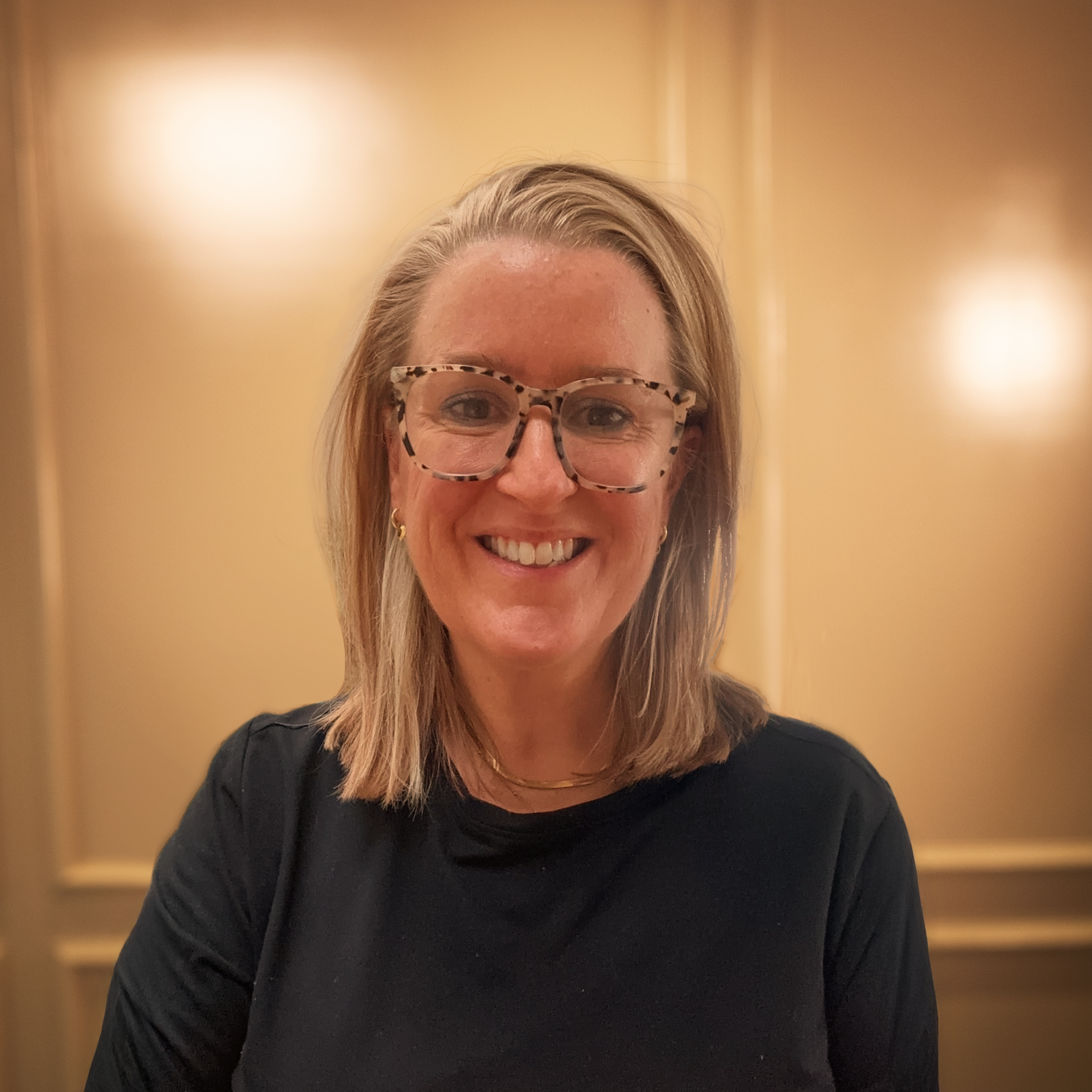
In this episode, we speak to Michael Martin, Design Director at Echelon Data Centres. Concerned with creating data centres for a dynamic, evolving technological landscape, Michael discusses how traditional design approaches are being fundamentally reimagined as AI transforms demand patterns and quantum computing emerges. Drawing on more than 20 years of experience in infrastructure and mission-critical facilities, Michael oversees design strategy and execution across Echelon's entire portfolio. He holds credentials as a certified project management professional, is a member of the Royal Institute of Architecture of Ireland, and serves as an Uptime Institute-accredited tier designer. Most importantly, he grasps the critical balance required between performance, sustainability, scalability, and long-term adaptability.
Watch this episode on YouTube:
Listen to this episode on:
You can read the transcript of the discussion below:
Sarah Davenport
Today on Capstone Talent Talks, Oli and I are excited to be joined by Michael Martin, Design Director at Echelon Data Centres. Michael is right at the cutting edge of one of the biggest challenges in our industry: how to design data centres for a world that's shifting faster than ever. With AI already reshaping demand and quantum computing on the horizon, design principles are being rewritten in real time. Michael brings over two decades of experience across infrastructure and mission-critical environments and now leads design, strategy and delivery across Echelon’s portfolio. As a certified project management professional member of the Royal Institute of Architecture of Ireland, and an Uptime Institute accredited tier designer, but above all, he's someone who understands the urgent balancing act between performance, sustainability, scale and future proofing.
Thanks for joining us, Michael. We're really pleased to have you.
Michael Martin
Thanks very much for having me on.
Sarah Davenport
Let's start talking about your career. How on earth have you got to be Design Director at Echelon? Talk us through from the start, because the aim of this is to kind of lift the bonnet on how people ended up where they are. We so often see the shiny bios, but we're keen to really unearth what got you to this point.
Michael Martin
Thanks, Sarah. I suppose my career started as an architect. I still carry a lot of the learnings and experience from that to where I'm at the moment, which is probably different to other directors of design in other data centre companies. They would have a much more mechanical, electrical kind of bias, training and expertise. I don’t have the principles in that, but my background is architecture. So that's where I started out. I studied architecture and spent a couple of years working as a project architect. As it happens, a recession came to Ireland. It was pretty hard in Ireland in particular, because we were so reliant on the construction industry. It was exceptionally hard. Most people in the industry, it's fair to say, lost their jobs. I did too.
That was about November 2008. After working for so long to become an architect, I actually got my chartership in the same week that I got my P45, when I was made redundant. So, my plans to become an architect and my aspirations were in shreds, and I needed to rethink. I worked very hard to find a job in project management, which I worked in the public sector for a couple of years, which got me through the recession. But what it did do as well, I did project management training off my own back. I saw that I needed to adapt and survive. I also went on and, fortunately, I was able to get a scholarship as well for an MBA, so I spent the time really upskilling and trying to improve. With all of that, around 2015, my former employer, Jan Van Dijk, he had worked in Saudi Arabia and was working on some mega projects out there and needed somebody to lead design.
So, at that point, it was great. I was then coming with the architecture and design background, but also the project management and MBA experience that I'd had in the interim period. Saudi Arabia was quite different at that time, very different. I moved there and spent a year in Riyadh leading those projects. We were working on a third of the design across a $3.2 billion project, which at the time was unheard of. A project of that scale in the data centre industry now is probably pocket change compared to some of the figures you see in the news, but it was a huge task, and it was an incredible kind of learning curve. It was a real challenge.
Sarah Davenport
Was it a data centre?
Michael Martin
No, no. This was large infrastructure. It was mainly security facilities, but there was a lot that was mission-critical as well. There were actually some data centres within that, but at a much smaller scale than what we're working on today. My family were back in Ireland, and that was all a challenge. So, I brought them all out and moved to Bahrain. Spent a couple of years out there working on, again, large infrastructure projects across the Middle East.
I was gaining a really good cross-disciplinary experience throughout that period, working with civil structures, mechanical, electrical, ICT, security, and everything I deal with on a day-to-day basis now. The reason I highlight all of that is that some people may be considering a career in the data centre industry. How do I get in? If you have some multidisciplinary experience, wherever that might be, that will certainly help. If you’ve got infrastructure experience, that will certainly help. So, you don’t necessarily have to have data centre experience to get into the data centre industry, that chicken and egg scenario.
After I returned to Ireland around the end of 2019/start of 2020, I started to work on large infrastructure projects again here, again as a design consultancy. I started working on data centres about five years ago now, which isn't a lot compared to some people, but it's a lot more than others in the industry at the moment because it's growing so rapidly.
Sarah Davenport
Did you start the data centre piece when you were with AECOM?
Michael Martin
Yeah, so I bridged from the large infrastructure and leading design on large infrastructure projects into data centres. We were doing a lot of work for hyperscale and colo clients and I was basically leading design on their projects. And then I got promoted to a regional director role and started to have an oversight role on several design projects in parallel. That's kind of what led me to Echelon Data Centres. I basically started there about 18 months ago, as Director of Design, and all is going well so far, thankfully.
Oli Coote
Did you find that transition to more of a DC focus was quite organic, that things moved in that direction? Or did you find that actually, that was clear that that was what was needed, a focus in that direction, and because you had a bit of context on that from the time in the Middle East, that meant you were the best choice over AECOM, for example? Is that how that came about, or was it just more organic in how you ended up there?
Michael Martin
Yeah, it was organic, but I had an interest in the data centre sector, and I could see what was happening. The thing that probably attracted me so much was that I could see it was really fast paced. It was technically challenging, it was just a really interesting space to be in, something I felt I'd be quite good at and where I'd be able to add some value.
And also, I'd been working on large infrastructure projects as well, where they may have been of the same value as some of the data centre developments that I ended up working on, but they were taken twice or three times the amount of time to deliver, with so much chopping, changing, and indecision.
Whereas, when you're dealing with data centre clients, they need to get it done. There's a demand for data centre space for, at the time cloud compute predominantly, and now cloud with AI and variants. But I just knew that it was fast-paced, exciting, and I felt it would be a good fit. I was looking to get a piece of it.
If there is anybody out there who's looking to move into the data centre industry, I'd certainly recommend it very highly if you want a challenge, if you are excited by dealing with lots of people from various technical backgrounds and across different geographies, and with there being new, innovative, and developing technologies all the time.
So, there can be moving goalposts, but it's about being agile, proactive, and enjoying the work. You'll really get through it and enjoy it.
Oli Coote
That proactive point is interesting. I'm just thinking about, again, your own sort of pathway and some of those points along the way there that probably presented a bit of a challenge at the time, but because of how you took that on, it's quite interesting how that then moved things forward for you. So, when it was the GFC and some of the challenges there, actually, let's move on to the front foot here, how can that then address this situation to get that to the next place? That then obviously moved on with an MBA and so on, and then out to the Middle East. So that's quite an interesting point there, in terms of that kind of open-mindedness and proactivity about how you can try and make something work as well.
Michael Martin
That's just my nature, I suppose. I really like a challenge. I get bored very quickly if I don't have one. What I'm saying is if on the other hand, if there were people who were happier with an easier-going kind of more reliable, 9 to 5, then maybe the data centre industry isn't the best place for you. But balance can certainly be achieved in the data centre as well, by the way. It's not the Wild West, but it can be demanding, and it can be as crazy as you let it be. So, you need to apply the balance. But the more of a challenge that you can take on, the more that you'll be able to progress within the sector.
Sarah Davenport
Well, there's always something to be done. And I think, if you were attracted by the pace, the pace 5 years ago will be significantly different to the pace that you're working to now, I would imagine. So, Michael, in terms of the role that you're in at the moment, are you very much on the construction as well as M&E or is that divided out in terms of your role? Have you got the overarching design oversight?
Michael Martin
Yeah. So, within our business, we've got design for energy systems like substations and energy centres. Energy centres feature prominently, particularly in our Irish developments. We have a separate team leading them, and Cormac Nevin is our Head of Energy Systems and an incredible guy in many ways. His thought leadership has been absolutely central to our ability to secure power and develop sites. But Cormac and his team are leading the design on all of the energy systems.
My role is specifically on data centres, the data centre sites and the immediate infrastructure to support them. My remit is we've got sites right across Ireland, the UK, Europe, and we're also developing work. We've completed design on some sites in the US as well. My remit covers all disciplines, and whatever is required to produce design. As a Head of Design, part of the delivery group within Echelon Data Centres, I work very closely with the Head of Procurement, Head of Construction, Head of Operations, and the Head of Health and Safety. My role, I see it as really to make sure that we're passing on design to our construction teams, which is as constructible and safe as possible, so we're working very closely with our Health and Safety Lead. Then, to make sure as well that it's commissionable and that it's operable, because ultimately, we want assets that are going to operate well with the appropriate redundancy built into them to ensure uptime right across that life cycle.
Sarah Davenport
Certainly is. Given that, I imagine from a design perspective, balancing pace with ultimately designing something that's going to be useful, have legacy and longevity, how are you balancing that at the moment? Because that must be really hard because you can't, I would imagine. I'm not a technical expert, but I'd imagine that you're scoping design with customers who, I mean, nobody knows what's going to be needed. Obviously, we can make educated guesses, but how are you incorporating flexibility into your design?
Michael Martin
A million-dollar, or actually a trillion-dollar question. But yeah, so that's like we've had, clearly, all data centre operators or hyperscalers for self-builds and colo providers, where everybody's trying to develop reference designs. Reference designs are great. You're able to replicate and use scalability, efficiency, speed to deliver, ready for service halls.
The challenge is, as you said, in a world where AI has, over the last 2 years, caused some major rethinking. There are a lot of hyperscalers with their compute strategies, and they're probably some of the biggest, most powerful companies in the world. And they've got the best minds working on this, and they've been working for some time to figure out what the kind of growth trajectory is. How is AI going to be deployed? What will the world be like in 5 years, 10 years?
So, with their exact approach to it, only they will know when they're very guarded about it. But what we've been doing is working very closely with them, as they're essentially our primary tenants, to work with them, to understand what their requirements are and how we can have designs that will work for them. Ultimately, what you're trying to do is have reference designs that have some flexibility in them so they're not bound too tightly to any given tenant, having all your eggs in one basket. But there has to be some flexibility for further deployment of AI and flexibility within those data centres.
Probably won't go into it in a lot more detail than that, or I'd be giving away things I could get in trouble for, but I think above all, we need to be agile, and we need to have good close relationships with our customers, which we have, and work with them to find solutions. So that's exactly what we're doing.
Oli Coote
And when you add quantum computing to the mix, that's another period of time where you could probably spend a fair bit of time head-scratching.
Michael Martin
Correct. And I'm doing a bit of head scratching on that at the moment with high-performance compute, and there are various other newer data centre clients entering the market that have high-performance compute that are essential to what they do. So, we're working through how we can provide data centres to support their requirements as well.
Oli Coote
Given that 10 years is maybe a time horizon that is a bit too far, 5 years maybe is a bit more manageable, and you can kind of maybe look ahead 5 years, and consider what that picture might look like, because no doubt you know a lot of those things are in spades are in the ground now and so on.
In terms of talent and challenges when it comes to that next sort of 5 year period and skill set, how do you see that in terms of what organisations maybe could/should be doing now to, over the next 3 to 5 years, really be in a position where hopefully then we get to that point and actually that 10 year horizon from now is actually only 5 years away and perhaps we're in a stronger position. Have you got any thoughts on that?
Michael Martin
In terms of how we develop and grow resources to basically support this journey, it's a really good question, and everybody in the industry is being affected by it clearly.
When I was starting in the data centre industry, there was more of a chicken-and-egg scenario where you couldn't really get your foot in the door unless you had data centre experience. And we clearly have to look outside that. We need to continue to develop the resources and talent that we actually have within the data centre industry as it is, because challenges are becoming bigger and more complex.
So, you don't just get in the door and stop at that, and you just do your job. It needs to be continuous training and learning for everybody, myself included. So then, with new resources, attracting and bringing them in. We need to look at where there are parallels or transferable skill sets. And, when we're interviewing people, look past the fact that they might not be the strongest with electrical engineering or they may not have strong project management experience, to deliver design. That's something that can be trained.
I think a lot of it is about understanding that technical expertise can be trained if you've got the right person, who has the aptitude, the interest, and motivation to take it on. If they have a track record of high performance and you can see that they're committed, then you know that they'll have the commitment to take on that knowledge and continue their high performance. So that's really it.
I was on a site visit to a vendor's factory yesterday, an electrical vendor that specialises in electrical equipment, and they're facing the same challenge. What they've done is set up academies, bringing in people from various backgrounds, many of whom are not directly related to electrical equipment manufacturing. However, they provide them with excellent hands-on training, mentorship, buddy systems, quality control, and assurance. That's in a kind of manufacturing context, but there's no reason we can't do that within data centre companies, right across all business functions and within our design consultants that I'd be dealing with more directly as well.
Sarah Davenport
I was going to say, how are you balancing pipelining future talent and nurturing those skills and PR-ing effectively or rather unveiling what a data centre actually is to the younger generation, and anyone, as not many people know what a data centre is. So, how do you balance your long-term pipelining with the immediate need for talent, resource, and diversity of thought? I don't know what functions you have internally, but presumably you have some partnerships with consultancies, designers, architects, and the like externally.
Michael Martin
Yeah. Clearly, I think we are getting better, but we still have a lot of work to do in terms of helping the general public understand what data centres are and their importance. And similarly, in terms of attracting talent, certainly, we have internships within our business, and we are certainly trying to market Echelon Data Centres, but also data centres in general and the benefits of them for public benefit. You will see a lot of design consultancies now are reaching out to universities and even secondary schools and doing STEM programmes and various other initiatives, which are really, really positive.
The more of that we can do, the more certainly that will bring about an interest in it. We've got a really good transition year programme. In Ireland, the transition year is between your GCSEs and A-levels, or the junior cert and leaving cert, and the equivalent. So, we're bringing in secondary school students and giving them a 360-degree view of what we actually do, from site selection through to design, construction, commissioning, operations, as well as the finance, administration, and governance aspects of the business, including policy and legal. And so, they're leaving with a 360-degree view and understanding as well; data centres aren't just about engineering - you don't have to be a whiz engineer. There are so many other opportunities and so many other skillsets and aptitudes that can bring you into the data centre space.
Oli Coote
That's a brilliant initiative, and all of these things are great, aren't they? And they take a little bit of time just purely because of the age of the people who are going through it. Again, we think about that 5-year horizon, for example, and actually with the momentum that I think is building in terms of that broader education piece around actually the awareness more publicly around data centres, through what we're doing right now and a whole lot of other things, obviously.
And then you have programmes such as those that you talked about there, and fast-forward 5 years, we may be in a very different place for the positive, because actually, there's so much more awareness and understanding. But equally, people have gone through those programmes, apprenticeships, internships, academies and partnerships with universities.
Yeah, it feels like the future is bright from that perspective, albeit you know clearly these things take time.
Michael Martin
Even at Echelon Data Centres, our joint CEOs, Niall Molloy and Graham Williams, made time to spend on our transition year with our programme, and spent a lot of time preparing it, invested a huge amount, met everybody and just explained to them what they do. And it just shows you, like a lot of our C-Suite, they were all involved in those engagements. We really are committed to developing younger talent and their interest in the data centre space.
But it just shows you that perhaps, the hyperscale data centre operators and cloud providers may not be able to give time, the time of their CEOs, to transition-year kids. Our CEOs, I can assure you, are extremely busy, but it just shows you the level of commitment that they have, which I think is pretty admirable.
Sarah Davenport
And I think it brings a human element to what's traditionally not a human sector, whereas it is fundamentally human led. That’s incredible, the work that Echelon is doing. What about collective impact in terms of the industry as a whole, do you think?
Our perception is that, in terms of networking and people being open, we find people incredibly generous with their time, bringing communities together within the data centre world. But is there an opportunity for more collective impact when it comes to talent, do you think? So, bringing in more operators, developers, everybody from the kind of the supply chain together to tackle the talent topic.
Michael Martin
It's a really good question. For years, there was open compute, and there still is a lot of closely guarded compute, clearly, but the open compute strategy has been such an immensely positive initiative.
There is an opportunity to do something similar, where data centre companies club together and see how we can actually do this, as an industry, and maybe some of the industry bodies as well could spearhead that. There are some really good industry bodies, and even country-specific. They carry some weight, and they're very effective in supporting the data centre industry.
But perhaps that's something that would be really, really positive for them to invest some more time in. And again, everything they do is with the support of the data centre customers. There'd certainly be a huge win-win there if we could do that. Like that's a really good suggestion, Sarah.
Sarah Davenport
I mean, we were in Amsterdam last week for the Data Centre Expo Europe, and Oli was on a panel talking about talent, and I was sitting there listening to these amazing minds, and they've got a problem. And, surprise, surprise, they've got the same problem. And this guy's coming in, and they've got the same problem. And I thought, “Why are we not bringing people together to do something?”
And I think traditionally, we worked with a data centre scale-up a couple of years ago, bringing in a lot of their founding team, and we were going at 90 miles an hour, but it was crazy how they couldn't tell me where the data centre was. It was so closed, such a tightly kept secret. “We can't tell you where the data centres are.”
I thought, “OK, if this talent is going to be based across four continents, I need a bit more intel so that I can at least narrow the search slightly.” But it is much more open now, and I think we can go further. And then my mind starts going, as I'm obsessed with talent, and I'm like, we can do something here. We need to just start those conversations.
Michael Martin
Yeah, I agree. Look, there's clearly still a lot of confidentiality required in some aspects of the industry and with very good reason, and that really needs to be respected. That's certainly something that Echelon Data Centres does. But there was certainly a culture previously because there were so many things that were confidential that nothing else could be spoken of.
So, I suppose we still need to be very vigilant in terms of what is important from a confidentiality perspective, but be far more open and collaborative and, while there's competition between various organisations, it's in our shared interest. They can still compete in other ways with their unique selling points, but the shared benefit of getting good resources into their companies.
So yeah, you guys are at the coalface on that one. And there's no kind of silver bullet on that one, unfortunately. But there is definitely scope for more openness and collaboration to support our growing needs.
Sarah Davenport
Yeah. It's better than robbing Peter to pay Paul with the same talent pool; that's just completely ludicrous, because the only person who wins is the talent who gradually gets paid more and more and more. But actually, we've got an ageing workforce in the data centre world relatively. So, we need a bit of fresh blood.
So, what's your outlook over the next 5 years? What are you excited about? Not necessarily just on the talent front. What is it about the industry that isn't obvious that you're excited about and that you think that message should get out there?
Michael Martin
The thing that I'm most excited about is the direction that Echelon Data Centres is going. It was announced yesterday that we're entering the Milan market. I've been here for 18 months now and am seeing that come to fruition. We're about halfway through the detail design. That's really, really positive. It's really energising to see that people's hard work is being realised.
We're also going to be entering the Spanish market. We announced a couple of weeks ago our joint venture partnership with Iberdrola, the largest utility provider in Spain, which is extremely positive. It's an amazing initiative that is the envy of many others for understandable reasons. But we're expanding. There are other sites and jurisdictions in Europe that you'll see us in in the not-too-distant future.
And our presence is continuing to grow in the US as well. So, what really excites me is that the opportunity is there, and we're going to continue to support our customers by providing them with secure data centre space that they need to meet their compute and AI demands.
Sarah Davenport
So exciting, isn't it? And if you think about some of the core skills that are needed, i.e. problem solvers, and if you're looking at that JV with the utility companies, like that's brilliant. It's just bringing everybody in the ecosystem together. That's a really refreshing kind of model, isn't it?
Michael Martin
Like I think one of the things about Echelon Data Centres, I think that does actually separate us from others, we have leaders who are visionary, and we've been developing data centres in Ireland when many others couldn't because we've been able to support the utility and the grid operators by having power generation on site, but also, we're bringing in, on one of our sites, we're building a 220kV substation and bringing in power from offshore, second phase of a wind farm development.
We're reusing some existing sites in areas that were hit economically by the kind of closure of those sites in the past. So, in terms of sustainability, like right across every facet of sustainability, not just CO2 reduction, but also social and economic sustainability. That's something that we're very much engaged in.
We're also going to be working on repurposing some existing facilities and seeing basically how we continue to deliver at scale. But, essentially, do that in the most sustainable way possible, really. So, there are lots of other kinds of aspects of what we've done that have been quite visionary.
But I suppose back to the initial point of the JV with Iberdrola and entry into various markets and the partnerships that we're building, like there is a level of innovation and just a vision there that our senior leaders and our partners in Starwood Capital Group as well, are bringing to the table which is really allowing us to grow very quickly and, develop really, really good sites for our customers.
Oli Coote
It's interesting that there's that vision and innovation when it comes to strategy, concept, design and actually what that then means in terms of keeping pace with the evolution of everything. But then equally the sustainability piece as well. There's a huge amount happening there, which is fantastic, isn't it?
And ultimately, that comes back to the socioeconomic point that you mentioned there, which creates jobs, and actually, there's that much wider benefit to the broader public, which is fantastic.
Michael Martin
There are win-wins. Some operators perhaps might just want to develop a site, get those halls ready for service and generating revenue as quickly as possible.
That's clearly important, but if you can look beyond that and ensure that you leave a minimum trace on the environment and even do what you can to support the environment by building substations to bring energy from offshore wind farms. That's not just for the data centre, like that's supporting the National Grid and that has benefits beyond just the data centre development itself. And there are various other initiatives as well, that's just one example.
That’s what we have been doing, that we've been supporting the local grid as well, rather than being kind of an impediment or a drain on it. There are many accusations being bandied about, particularly in Ireland, that we're using up all the power in the country. That's not correct. We're actually doing a lot to support it and improve a kind of grid that's in bad need of further development and investment. It's actually those partnerships that can really improve the development and adoption of more sustainable technologies as well. And I think there is a huge amount of progress across the data centre industry.
Many operators and hyperscalers are investing heavily in these technologies, and they are not just being deployed in data centres; they're being deployed across various developments in society, truly supporting the greater good.
Sarah Davenport
And I think that's going to attract the future generation as well who are super passionate about legacy and sustainability. Sorry, Oli, I jumped in there.
Oli Coote
That's exactly what I was going to say.
Sarah Davenport
Oh, there you go. Who'd have thought it? We’ve been working together for too long.
Michael Martin
Great minds think alike, yeah.
Sarah Davenport
We have absolutely loved hearing what your career journey has been, Michael. And also, the work that Echelon is doing with all the innovative and visionary work that's happening is going to create really exciting careers.
We're very thankful for you sharing the experience you have and the insight you bring. Thank you very much for your time.
Michael Martin
Thank you very much, Sarah and Oli. A pleasure speaking with you.
Oli Coote
Thank you very much indeed, Michael. That was brilliant.
That was an enlightening conversation with Michael Martin, Design Director at Echelon Data Centres. His journey from architecture through economic recession to mission-critical infrastructure across the Middle East and into data centre design offered valuable perspectives on adaptability and career resilience. He explored how Echelon prioritises aptitude and motivation alongside technical capability, demonstrating a commitment to looking beyond traditional data centre experience when building teams. Michael is advocating for greater industry collaboration on talent development through initiatives like transition year programmes and skills academies, while championing sustainability and innovation in design. His emphasis on agility and continuous learning is helping shape how the sector approaches futureproofing both infrastructure and workforce strategies. We are extremely grateful to Michael Martin for joining Sarah Davenport and Oli Coote on Capstone Talent Talks.
Related Insights
\\