

Talent Talks: Stefan Riedmann
Introducing Talent Talks, the podcast where we dive into all things talent in the real estate, construction, and infrastructure world. From the boardroom to the building site, we’ll uncover the stories, insights, and people shaping our industry today. We shine a spotlight on data centres, one of real estate's fastest-growing and most in-demand sectors.
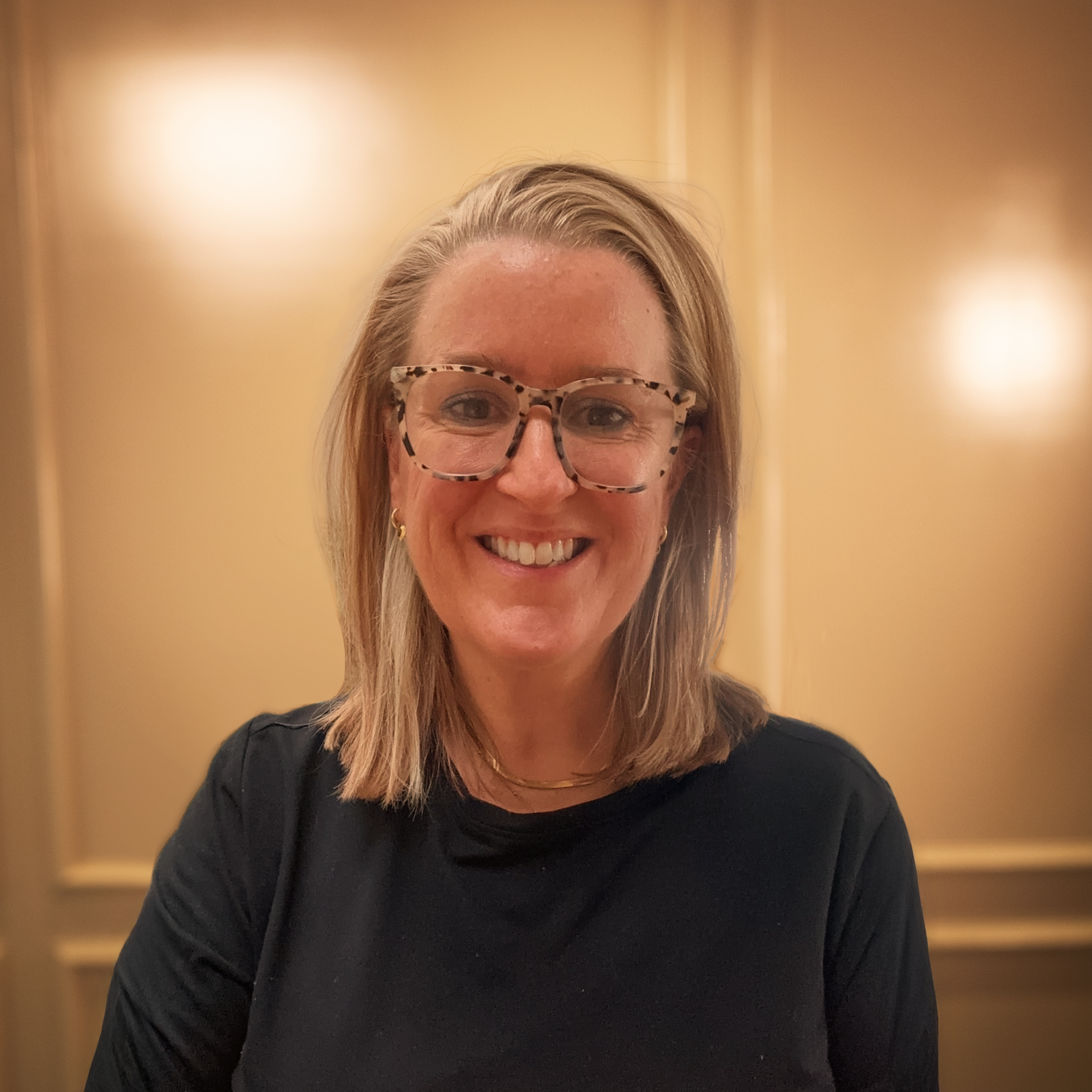
In this episode, Sarah Davenport, Managing Director at Capstone, and Oli Coote, Data Centre and Real Estate Sector Lead, speak to Stefan Riedmann, Associate Director at BCS Consultancy. Stefan shares his unconventional career journey from civil engineering to project management in healthcare, before his lateral move into data centres two and a half years ago. He discusses his rapid progression at BCS during a period of tremendous growth, building teams across Germany, Austria, and Switzerland, and navigating fragmented markets with varying regulations, alongside BCS's innovative athlete conversion scheme.
Watch this episode on YouTube:
Listen to this episode on:
You can read the transcript of the discussion below:
Sarah Davenport
Today on Capstone Talent Talks, Oli and I are joined by Stefan Riedmann, Associate Director at BCS Consultancy, who is an Associate Director and Head of Service on the project management side. He delivers large-scale infrastructure programmes, principally in the data centre sector, having previously worked in healthcare before moving into the data centre sector more laterally.
Stefan, thank you so much for joining us. And I should say that you're based in Frankfurt.
Stefan Riedmann
Yes, you're right. Thank you for having me. I'm based in Frankfurt, Germany. I'm originally from Austria, so I moved here about two and a half years ago, which coincides with the time that I got into the DC industry as well. So, still relatively new to the industry compared to some of my peers, but since it's rapidly growing and rapidly changing, there is an influx of new people that you see everywhere. It’s definitely great to be here.
Sarah Davenport
It's lovely to have you. Stefan, we always start off with you giving us an overview of your career, how you ended up within the data centre sector, and what your experiences have been. But it would be really good to understand what underpins your journey because you came from a civil engineering education background. Is that right?
Stefan Riedmann
Yeah, that's right. So I first attended the engineering school back in Innsbruck, where I'm from. Then I started civil engineering at the University of Vienna. I have to say, I never worked a day in civil engineering, thankfully, to me and everyone who would have stepped foot inside the building that I designed! After university, I went straight into project management, starting in the healthcare sector, where I did a few hospital projects in and around Vienna.
Then I had a brief stint in residential real estate, old rooftop expansion projects within the city of Vienna, and then moved into logistics and industrial real estate. And as stated before, about two and a half years ago, I made a venture into the DC industry.
Oli Coote
So, in terms of your education there, Stefan, you obviously have quite a technical foundation in terms of civil engineering. And so, moving into that area just wasn't for you. You thought, actually, no, I've gone through that pathway through my education. But actually, I guess now that I've experienced what that might look like, I want to just focus on a slightly different direction. Is that fair? How did that initial kind of transition into project management come about, rather than diving straight into the civil engineering world?
Stefan Riedmann
So, during university, I found out that I was, let’s say, a little mathematically challenged, and I started working part-time in a project management consultancy. I saw that that was definitely more akin to what I wanted to do in the long term. And so, during university, I was first working as an intern, then part-time, and then took a full-time position there, studying part-time as well. Somehow, I ended up in project management, and to be honest, I’m pretty happy there. Looking back at 10 years of experience within that industry, I still like it. I don't miss doing any calculations or any structural design, so that’s definitely going to be the way ahead for me as well.
Sarah Davenport
Less maths!
Stefan Riedmann
Less maths, definitely. More working with people, less working with spreadsheets.
Sarah Davenport
Yeah, absolutely. I'm married to a civil engineer, so I get the maths element. The pages of calculations are this long.
So Stefan, talk to us about your current role and the projects that you're involved with, as much as you can, and a bit about the data centre market in Germany. Are all of your projects Germany-based? That's an assumption there, but…
Stefan Riedmann
Yes, we’re a leading consultancy in the DACH region. So, we have projects in Germany and in Austria, and have recently won work in Switzerland. I'm looking at the German-speaking market in Europe. I started with the company two years ago, almost to the day. I started as a senior consultant, project manager and then worked my way up to become a team lead, to now becoming the associate director leading the whole region on the project management side of our business. And it's just an amazing experience so far. So, I really like my job there. I really like the colleagues that I have there.
And we did amazing things in those two years because, when I started, I was employee number 60. And now we have 160 people, which is just tremendous growth globally. And that's what I like about this industry, it’s still pretty new. You see so much change, so much excitement, so many things happening at the same time. It's really a great experience.
Oli Coote
And presumably, given that growth, from 60 to 160 over the past couple of years, have you had a part in that yourself with regard to building some of the team in Germany as well?
Stefan Riedmann
Yeah, definitely. So, there was something from the beginning when I started at BCS, the idea of the masterminds above me to grow the region, and to grow myself within the region to take on this leadership role. And so, I supported, from day one, the expansion of the team. In the DACH region, we started off with like 7 or 8 people, and are now close to 40. So, there's still a way to go, and we’re still growing, still needing new faces and new people. But I think that's what we are talking about today as well.
Sarah Davenport
Absolutely, absolutely. And from a project management perspective, are you involved with the construction and the structure side of things, as well as the fit-out, or do you have a bias when you're working on these projects?
Stefan Riedmann
So, we're doing the projects from the project inception. At BCS, we call it a full life cycle of land acquisition, doing the master planning, doing the design phases, construction phases, fit-out phases, until we hand it over to the operations teams. And then, later on, any expansion or end-of-life equipment changes.
I focus more on the hyperscale sort of things, where I take projects from when they have a master plan and the feasibility done, until they're being built, until they are being put into motion, until they're fitted out. It's what I specialise in.
Sarah Davenport
Great. And in particular locations across the region, are there particular challenges or nuances that you can share with us?
Stefan Riedmann
Yeah, of course. The challenges that we have are very different. The markets that we see, Germany, Austria, and Switzerland, they're very fragmented. You have legislation on the federal level, so a project in Frankfurt isn’t going to be the same as a project like 40 kilometres outside of Frankfurt because it's in a different region, with a different legal basis, and different permitting approaches. There are, of course, issues that we have within the whole region, within the whole countries.
Power constraints, land constraints, and still people, you don't get the resources, you don't get the power built. But once that is solved, it's going into the nitty-gritty of who is the right person to contact at which permitting office, and how do you approach them. That's very, very exciting because without that, every project would be the same, and construction is still very fragmented, very differentiated. Every project has its own challenges and its own opportunities, of course. That's what makes it.
Oli Coote
Have you found that your network across Germany has just gotten bigger and bigger? There's now more people that you've got to be involved with on a given project as part of that?
Stefan Riedmann
Yeah, definitely. Definitely. Since I've spent the first, say, 7 years of my career based in Vienna and built up my network there in various niche fields, as well, in healthcare facilities, and in the industrial logistics field. And since moving to Frankfurt, a new city, and moving into a new sector, I built my network from the ground up.
The data centre sector, at least, is a very accommodating industry. There are a lot of networking events happening. People are filtering in and out, and they're very open and keen to build and grow something together. So that's definitely a good way to build up a huge network here in the Frankfurt region and all over Germany, basically, of like-minded people. It's really nice to see.
Sarah Davenport
Yeah. As a sector, we find that as well, that everyone is super generous with their time, their introductions, the conversations, and the knowledge sharing. We've loved that, it's an important part.
Oli Coote
In terms of building these teams, I guess from your own experience, when you came from the healthcare side of things, it’s very technical, probably quite M&E-led, and things like that that translate quite well into the data centre world.
When you've been bringing new people in, have you found that there's actually, aside from the technical piece for a moment, other skills or cross-disciplinary skill sets or capabilities that you find are really beneficial to the DC sector?
If you're looking to try and bring a couple of extra people in for a project or in a location, is there anything in particular that you're looking for in those people? From a technical perspective, sure, but then, outside of that, what do you look for in particular?
Stefan Riedmann
Yeah, definitely. And I think the whole industry has made a shift in mindset in the last few years because I think just 3/4 years ago, everyone was very adamant that new project managers being brought in must have experience in the data centre sector, very strict.
And now it becomes more open, since we no longer have the resources or the people anymore. The industry has to open up, and what we are doing at BCS is definitely looking at the people as a package and the potential to join us to our business. I look more into the soft skill side. I look more into what the right attitudes are that this person has, and do they bring the right mindset to deliver projects in this exciting but challenging environment?
And they don't necessarily need to have the technical experience. I think we, as BCS, are in a very good position since we are specialised solely on data centres and critical infrastructure, that everyone in our business, or has spent 6/12 months or whatever time in our business, is going to be a data centre expert. We have so much experience in that particular sector, new joiners just soak up like a sponge during the first months.
So, the technical knowledge isn't really a deal breaker. In the end, we're a people business, and project management is about taking care of the people we work with. You need to manage your stakeholders, your expectations, and if you have the right mindset and right attitude around this, the technical knowledge, we'll find some specialists that can help out for this.
Sarah Davenport
What have you found to be the biggest challenges around talent at BCS Consultancy?
Stefan Riedmann
The biggest challenge, I would say, is that the market still has a very high demand here in Frankfurt. The talent pool in and around Frankfurt is empty. So, people are looking, and we are looking to expand our regional footprint in other locations, like Berlin, which is going to be the next hotspot.
So, we're keen to be hiring people in Berlin that we need for projects in Frankfurt, as we can support the pre-construction stages easily without much travel, and then trying to grow the team around that and around the future markets that you see pop up.
Oli Coote
I suppose it's having an open mind on those people that you're bringing into the team based on their mindset and their attitude, and actually what they're bringing to the table beyond the technical side for a moment and more from the ability to kind of work with stakeholders and so on and work with the team.
But actually, it's also the challenge of speed. There's a sense of actually, because of the demand in the market, you would likely take a little bit longer to look and find the right people necessarily, but actually, you've got to move quite quickly.
And so, is that possibly the more challenging part of it at the moment? There's an awful lot you've got going on, let's say in Berlin at the moment. And so actually you've just got to find the right people tomorrow. Is that more of the challenge?
Stefan Riedmann
That's definitely a challenge. Finding the right people in a short amount of time. But we are very, very picky with who we work with, with who we hire. And with hiring someone, like some companies do, just to be a “bum on the seat” on a new project that we're about to win. We'd rather not win the work.
We'd rather turn down our clients if we don't find the right people for our business and for their commission. And thankfully, we're still in a very good position where we can do that without losing too much of our business. And that's definitely something that we want to continue in the future as well, if the market allows.
Sarah Davenport
That's how you're able to maintain the standards and the reputation that you've obviously worked so hard to garner.
And what about emerging markets or emerging talent pools that you are really excited about in the coming years? Is there a particular focus or niche that you guys are looking to attract from a talent perspective, or are there particular locations?
Obviously, we've spoken about Berlin. Are there other particular niche areas that you're excited about, Stefan?
Stefan Riedmann
Yeah, definitely. We've just opened up an office in Warsaw a few months ago, and we definitely want to grow the team over there because we know Poland; they have a great quality of university students, and a high quality of engineering staff there, so we want to tap into that talent pool. From Poland to Berlin is just a few hours, right? So, we want to use the office in Warsaw, once it grows, as a back-of-house for the projects we have in Germany and Austria, where we can’t find local talent.
And it's always our approach to blend the right amount of global expertise that will come from, be it the UK, be it Poland, be it somewhere else, and local people that can be the boots on the ground that we need to have on any construction. And I'm really excited because we just started this process of growing into emerging markets, dipping our toes in the water, and I'm really excited to see where it's going to head over the next months or years.
Oli Coote
In terms of how things are evolving within the industry at the moment, and the pace and scale at which things are evolving, I guess that can affect people who are already working within the data centre world, just because of the speed of it.
But equally, those people that want to get into the data centre industry and, we've talked a bit about mindset, but in terms of how either people that are established in the industry might need to adapt, but equally those entering the industry adapting to step foot into that landscape, is there any thoughts around that that you're seeing?
Or because you know what's coming down the track, you're thinking actually, if there's people that are doing X, Y and Z at the moment, that's going to serve them really well 3/5 years down the line, for example.
Stefan Riedmann
I think that's a good question. I think as an industry, we’ve started the process of opening up to new talent, and I think a lot of people who have been in the industry for 15/20 years are starting to also open up and accept new ideas, and new people. That's definitely something that the whole industry is going to benefit from.
And I think for young people who are looking to get into the data centre industry, I think there are 2 perspectives to look at.
Firstly, as a sector, we need to become more visible to those young people, to those university graduates and to those people working on the ground, be it as electricians or as mechanical engineers. And people who are working on that definitely need to pick up the soft skills needed to adapt in this work, because we see the world of work is changing. Everyone's talking about AI and how that will change the job space, and how it will change any office job, basically. So, people who are faster to adapt to this new reality will definitely benefit from it in the long term.
My advice would be to have an open mind and to embrace new technology. Embrace new ways of thinking.
Sarah Davenport
Yeah, that’s only going to become more important because technology has never evolved as quickly and will probably never evolve as slowly as it is now. So the corkscrew is getting tighter.
And is there anything in particular that you're doing at BCS Consultancy to tackle the future skills and future talent shortage? Apart from being open-minded, which is absolutely vital, do you have any involvement with the talent pipeline at university level or at school level, or particular industries that you're looking to attract talent from?
Stefan Riedmann
Yes. So BCS has, for a few years now, a very well-run apprenticeships team and a very good apprentice graduate scheme, where young people join the business during their last year in university. And I think they're working with a few universities in and around London, we want to roll out the same system to all our office locations in Germany and the rest of Europe as well.
And one scheme in particular that they're very fond of is the athlete conversion scheme that BCS launched a few years ago, where they take an influx of people, former athletes that are at the end of their athletic career, be it by injury or by just getting to the ripe age of 30, and giving them a second chance in sports terms at least, and giving them a second chance at a corporate career, bringing those people in.
If you ask, it's forward thinking and what I said previously, all about the mindset. The CEO is very keen on that scheme because he said someone who can train every day during summer, wind and rain and get to these high-performance athletic accomplishments is a person who you can teach anything in just the shortest amount of time, and they will have the mindset to push through and get things done.
Sarah Davenport
That's really interesting. And is that how you got in? No, I'm joking! Has that had some good examples of that being a success?
Stefan Riedmann
Yes, a few people came in that had basically no prior training and then just within months, within half a year, they're very accomplished project managers on projects, cost managers. We have some in our back office. Our new head of marketing, Anna Rantala, came through that scheme.
Sarah Davenport
Oh really? I loved her rebranding. It was amazing.
Stefan Riedmann
She's been with the business now, I think for a few months. And she already did this amazing rebrand.
Sarah Davenport
Wow.
Stefan Riedmann
She’s been setting up new quality standards for everyone in the business to aspire to. So that's really inspiring really.
Sarah Davenport
That's amazing. Well, if you think about, I suppose, the sportsperson's mindset, it's about marginal gains and it's just that consistency and following a process and constantly evaluating the impact of tweaks. And that's fantastic that's been such a success.
I can't believe she's only been there a few months and she's done that incredible rebrand. That's amazing. That's really good. And also, I suppose, nice from a cultural perspective within an organisation that you have a diverse background and diverse thoughts that are kind of coming to the table.
Stefan Riedmann
Yeah, that is where I think coming from different backgrounds, not just what the education is or universities or how you got into the business, but also it's very diverse actually, we have all kinds of different nationalities working in our offices.
So, I don't know how many languages are spoken on a day-by-day basis. It's really great to work in this environment. You get different viewpoints from different people. You learn something from each other, and that's beneficial, I think, for everyone involved.
Oli Coote
You just want to choose carefully, especially if you ever do a team-building exercise where someone suggests a certain sport, and they think, 'Well, hang on, we don't want it to be too unfair.'
Stefan Riedmann
Yes.
Sarah Davenport
Well, make sure you're on the team with the athletes!
Stefan Riedmann
Yeah, you need to be on the right team, yeah.
Oli Coote
Moving forward, Stefan, we talked about the pace of change with everything at the moment, and over the next few years, how it’s just going to increase and increase. In terms of what you're excited about, I know there are different locations and things like that. Is there anything beyond that at the moment, because you've got a bit of foresight compared to where we sit, that you're looking ahead and thinking this is going to be incredible in the next sort of few years?
If you think this is amazing where we are now, is there anything like that that you're excited about in particular, talking about attracting new people into the sector, that you might just give a bit of a sense of, this is already a pretty interesting and exciting place to be, but there's more to come.
Stefan Riedmann
Yeah, I think the most exciting bit about working in this industry is that no one knows where we will be in five years. There's just a lot of uncertainty. And we're in a very interesting position. We are right now at multiple crossroads with the industry at the same time. We have this tremendous growth trajectory that's just going up and up and up. On the other hand, we have a shortage of skills. We have a shortage of material, supply chain crunches. So how are we going to manage that? And that's going to be a very demanding, and a very interesting job over the next years.
On the other hand, we have the power constraint I mentioned before. I mean this AI, new technologies that we are embracing is now using more and more and more energy and the local supply, the local grid can't really keep up with that energy. So what are we doing? Are there going to be technological advancements? Are we going to become more reliant on new technologies, or are we diverting back from the sustainability goals, going back to using more fossil fuels just to bridge the gap until we have some new technology?
So exciting times, and we as an industry have been at the forefront of embracing sustainable and renewable energy, and I hope this trend keeps up. I'm not 100% sure how we will manage to do that, but I think that's the exciting part because everyone in the industry currently plays their role in making this future just marginally better with every project that we put out there.
Oli Coote
It's cutting-edge, isn't it? Everything that you're involved with is cutting-edge, and everything that you're trying to put in place is the foundation for all of this digital world that we're all involved with now. And if it's not being done by yourselves, that's where the change is coming.
And it's just so interesting, and I think again for younger people coming in, that excitement in and around the sustainability piece and actually how you're at the vanguard of how things are being done within the built environment more broadly and all of these things start to make these incremental changes that are from a sustainability perspective as well.
Not only are you able to put in place all of the technical elements that are actually supporting this digital evolution, but you are also actually doing a bit for the local area as well, which I think is quite interesting. That's not such an extreme challenge that so many other people are finding; I would say that they can be involved with it at the moment.
Stefan Riedmann
Yeah. I mean, as an industry, we are a bit shy of the public eye or have been up to this point, but I think we can't keep that up. So, we need to embrace that, become more open, become more visible, because if you go around Frankfurt by car, you'll see all these big warehouses with no windows. You see all these data centres, and they are there already. They are present, and the demand is growing. We need to have more.
We need to have them closer to the communities which they serve. We need to implement or get them into the communities, use the heat, the waste heat, get the fast, reliable data connection to everyone that needs it and allow for this technological advancement that we are all using daily.
And I think it's a very interesting approach, being at the very forefront of any technological advancement that we're seeing, because they won't happen without any data centres.
Sarah Davenport
Yeah, that's the thing, isn't it? And I suppose necessity is going to drive innovation much more than anything else. And there's an element of, yes, making data centres more visible. And I was interested to understand because in the UK, certainly, and probably most markets, there's a big visibility issue, but I wondered if that was different in Germany. But by the sounds of it, it's not or certainly across your region, that there is still that issue.
But, I think that the generation of workers coming through values legacy and sustainability so much more than certainly older generations, and therefore that's an interesting way of attracting talent into the sector, I would argue. And I would imagine that in Germany, where you've been so at the forefront of green initiatives, I would imagine that that's a big pull for people coming into the data centre world. If people are aware that that's what it's about, it's not a drain on the resources, actually, there's so much innovation around sustainability that it can encourage.
Stefan Riedmann
Yeah, I think it's all about the framing in the public eye. I mean, up until now, if the industry is very secretive, of course, who writes the headlines in the paper? It's going to be something negative. There is a big building coming. It uses all the water, it uses all the energy. And it just burns carbon if it's diesel generators, then people are going to be against it.
But if we as an industry go out there and say, okay, we are enabling the future of any sustainable technology, of any digitalisation, this is still about to happen and Germany is probably a very good example because the country is very innovative, but the digitalisation is still very far behind like other countries, and there's still so much to do, and there's still so much capacity that needs to be built for that to be enabled.
Oli Coote
It's like we were saying before, actually within the data centre industry, there's so many great communities and networking and people are very open to helping each other and sharing information and things like that. And I guess it's brilliant that we're all really good at that within the industry. We just need to then try and amplify that beyond and out. And I think there are inroads being made on that.
Some of the large companies are slowly opening that door to the public and giving a bit more access. We just need to have a bit more of that, I think, so that it does become far more visible, so much more understood by the wider public. And then from a talent perspective as a career path, it seems right up there in people's consideration because frankly, they just know a bit more about it.
Stefan Riedmann
Yeah, it's about getting the word out, and there are a lot of great initiatives. I'm a really big fan of the GeN+1 event series, what Richard and Holly are building there is just amazing, bringing all the youngsters in the industry together, and I think they're also helping opening up the conversation because those young people that just started, that just came fresh from university, came fresh out of their apprenticeship, they are going to talk to their peers and that's how we get the word out.
We get the ball rolling, then they go to one of the great events that Richard's hosting and then they are very convinced that this is an industry where you work hard, where you can deliver purpose and where you can also have a great time and where people have fun in general.
Sarah Davenport
Yeah. And I think you've got to, as an industry, recognise that there's so much opportunity for collective impact with the likes of GeN+1. They're doing incredible work. So yeah, I absolutely agree with you on that one.
I suppose I've got a broader question around careers and influences, because I'm a big believer that there are major influential moments or people in someone's career that help navigate a particular direction or pivot. Have you had a moment that stands out to you or a person that stands out to you in terms of influencing your career, and I'm interested to know how that impacts you on an ongoing basis?
Stefan Riedmann
Thinking back, the first discussion I ever had with BCS, which was about a year and a half before I joined, was with Chris Coward and Alex Mariage, and it was just a very nice discussion where it didn't feel like an interview. In the end, we didn't come to a conclusion. I was still back in Vienna that day, but it brought my attention to the data centre industry, and it obviously sat in the back of my mind.
But at that moment, or 4 years ago, nothing much was happening. And so when I decided to move abroad and do something international, by chance, I got the opportunity to come into the sector, as I was working back then with a different consultancy in Vienna. I said “I'm looking, I spent 12 years in the city. I'm looking for something new”, and I could envision myself sipping a cocktail at the beach of Barcelona, or working in a barrio in Bogotá, but somehow I ended up in Frankfurt in the data centre industry.
Sarah Davenport
Baby steps. Baby steps.
Stefan Riedmann
Baby steps, yeah, but this chance of me moving here and just taking a step was definitely one of the best decisions I made for my career, and then just staying in touch through the connections that I made opened up the opportunity to join BCS in Frankfurt, then a year and a half later. Every chance/opportunity that we can have or any discussion that we have at one of the events can be career or life-altering. So again, advice to the people out there is just, yes, grab the good luck if you find it and just take a chance once in a while.
Sarah Davenport
I love that, and that's certainly something that, because we've got a mentoring programme at Capstone, and I'm just getting the second cohort, because we are such firm believers that you have to build your network as early as possible and just be open to those moments. You might not be desperate in that moment to leave or to do anything, but being open to conversations and meetings like you were saying, it sows that seed subliminally and amazing things can come of that.
Yeah. We've got a couple of really, really good connections in Frankfurt that we should connect you with. You may well know them already. We've got Nqobile Ntombela. She's just moved from RLB to Mace. She's one of our mentors, and she's fantastic. And Franzi Marshall, who works with Buro 4. She's German, actually, but she's based in London, and she's going to be doing a fair amount of work over in Frankfurt as well. And they are great. They're great people to know. So, we'll link you up at some point as well. But I really enjoyed that conversation. Thank you so much for being so open and sharing all of your insights. And there's a lot for people to take from that.
Oli Coote
Yeah. Thank you very much, Stefan. That was brilliant. It's really good, I think, for you to be able to share your journey and thoughts. You're on the ground in it at the moment, to be able to share that with everybody else is brilliant. So, thank you.
Stefan Riedmann
Yeah. No, thank you again for inviting me, for giving me the opportunity. And I think if there's one young person that's listening to this podcast and thinks, wow, I need to go into the data centre industry afterwards, it's been worth it.
Sarah Davenport
Absolutely. That's brilliant. Thank you, Stefan. I appreciate that.
That was an insightful conversation with Stefan Riedmann, Associate Director at BCS Consultancy. His experience spanning healthcare, logistics, and data centre project management provided valuable perspectives on talent acquisition and regional expansion. He discussed how BCS prioritises mindset and attitude over technical experience, demonstrating a commitment to viewing talent based on potential. Stefan is challenging the industry to become more visible by focusing on soft skills and implementing innovative recruitment schemes such as the athlete conversion programme. His approach to blending global expertise with local talent is helping transform the sector's team-building strategies. We are extremely grateful to Stefan Riedmann for joining Sarah Davenport and Oli Coote on Capstone Talent Talks.
Related Insights
\\