

Talent Talks: Isabelle Kemlin
Introducing Talent Talks, the podcast where we dive into all things talent in the real estate, construction, and infrastructure world. From the boardroom to the building site, we’ll uncover the stories, insights, and people shaping our industry today. We shine a spotlight on data centres, one of real estate's fastest-growing and most in-demand sectors.
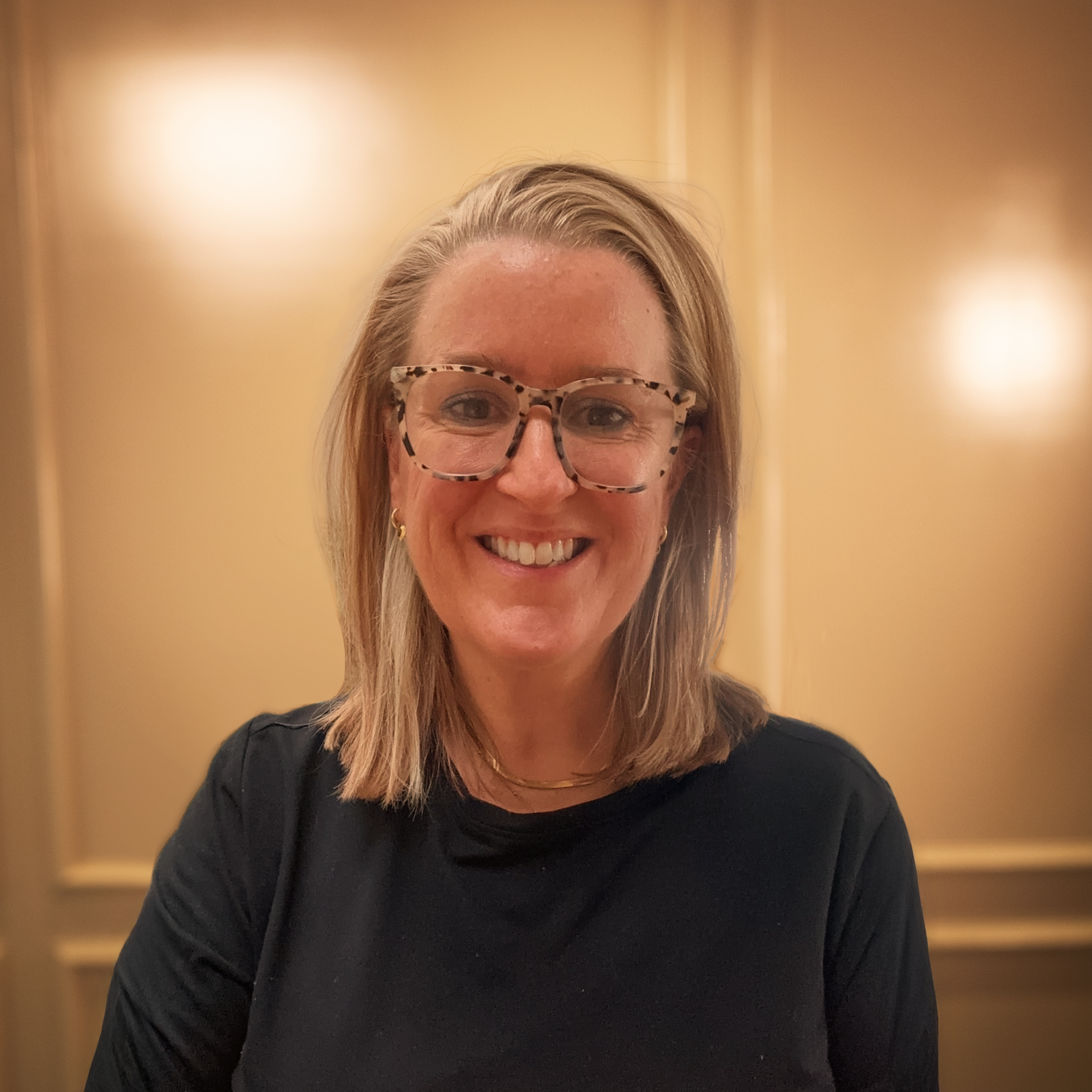
Today on Capstone’s Talent Talks Podcast, Managing Director Sarah Davenport and Data Centre and Real Estate Sector Lead Oli Coote speak with Isabelle Kemlin, the Senior Business and Innovation Lead at RISE, the Research Institute of Sweden, and the vice chair of both the Swedish and European Data Centre Associations. Isabelle has become one of Europe's most respected voices in the evolution of the data centre industry, bringing a uniquely holistic view of the sector that combines technical expertise, sustainability strategy, and a genuine passion for collaboration. She discusses her non-linear path into her current influential roles, and her instrumental work in driving Sweden's position as a global hub for responsible, energy-efficient data centres.
Watch this episode on YouTube:
Listen to this episode on:
You can read the transcript of the discussion below:
Sarah Davenport
Today on Capstone's Talent Talks Podcast, we are joined by someone who has become one of Europe's most respected voices in the evolution of the data centre industry. Isabelle Kemlin is the Senior Business and Innovation Lead at RISE, the Research Institute of Sweden, and the vice chair of the Swedish Data Centre Association and the European Data Centre Association. Isabelle brings a uniquely holistic view of the sector, combining technical expertise, sustainability strategy and a genuine passion for collaboration. She's been instrumental in driving Sweden's position as a global hub for responsible, energy-efficient data centres and has long championed the connection between innovation, research and, crucially, people.
Isabelle, welcome. Thank you so much for joining us.
Isabelle Kemlin
Oh, thank you for that introduction. Very kind of you, thank you.
Sarah Davenport
No problem. So, talk to us about how you have got to be in the position of influence and insight that you're in currently, because it's rarely a linear path into these roles. So, talk to us a bit about your career.
Isabelle Kemlin
Well, we can start off with the education. I have a Master of Science in Industrial Engineering and Management. It's kind of an education where you still have the feet in two pots; you have one with the economics and management, and the other one is more on the technical side.
And that is actually where I've been my whole career. So, bringing technology together and translating that language into a business language. And yeah, I've been in many different industries, but I got really hooked on the data centre industry, which I've been in 8 to 9 years now. And it's really exciting to be in this industry because there are so many things happening.
Sarah Davenport
Yeah. And was that with the role with CBRE GWS, you kind of found yourself on the data centre side, or was it a deliberate move?
Isabelle Kemlin
No, actually, it was not a deliberate move. I got into CBRE, and my first assignment there was the Ericsson account in EMEA, and of course, there was a lot in data centres as well. And the Nordics were growing, so they decided to have one business unit up in the Nordics for data centres. And then I got to lead that one, which was in a period where a lot of things were happening.
Oli Coote
And Isabelle, I was going to ask as well, because you asked me when we were in Amsterdam, and we're on the panel discussion that was all talent-focused, which was great by the way. The first question you asked to each of us was what was your first job, and how do you feel that might have related to what you're doing now?
Or maybe it's kind of impacted how you do your day-to-day job currently or maybe it doesn't at all? But equally, maybe what you learned along the way there? I'm just intrigued because there was a variety of answers across us on the panel, so I’m intrigued about yourself.
Isabelle Kemlin
Yeah. I also had a little bit of a different job, as my first job. I was driving a tractor in a field, harvesting peat, and it had double wheels because it could not sink into the peat.
And you were driving like 2/3 kilometres per hour for 15 minutes in one direction, and then you turned and did the same thing in the other direction. Then you emptied what you had gathered.
This was a summer job, and you only worked when it was really nice weather. So, when it was raining, you were having time off. I've seen, in a way, the heat reuse from a very close distance, because it was actually the peat that was going to a district heating company, and they were using that as a source.
You can always look back in the mirror and say that was a good thing there. But actually, working in the team, and also being in an environment which was very male dominated, you would, as we say in Sweden, have to have thick skin on your nose. I would also say how you can make a job that is very routine, but you can really have fun, and appreciate how important your colleagues are.
Sarah Davenport
I did not see that coming!
Oli Coote
No, that was brilliant!
But interesting as well, how that job, because it was harvesting peat and actually that was then being used in a sustainable way. It’s just interesting how again, from your educational background as well and how that's now maybe linking into some of the stuff that you're doing currently, from the research perspective, I'm sure, with initiatives there in terms of reusing energy. It’s quite interesting to be literally kind of on the ground, hands-on, involved in that, compared to maybe sort of how you're doing it now, which is probably quite different.
Isabelle Kemlin
Yes, it was really hands-on. I think that is something that allows you to socialise, and be with everyone, no matter of what kind of work or what kind of background. If you scratch the surface of each and every person, there is always something that that unique person can bring to the table. And I think that is also something that has stayed with me and will continue to do so in my leadership roles going forward.
Sarah Davenport
I bet. And tell us a bit about the work that you're doing currently, because you've got such an interesting oversight of so many different facets within our industry. Tell us a bit about the work that you're doing with RISE and the associations.
Isabelle Kemlin
So, I’ll start with RISE. First of all, my background is not in research. I've been leading teams in what I consider critical environments for the last 15 years. And that has been everything from mining, real mining, not data mining, but the iron mining, both underground and open mine. It was for a supplier, but it was also pumps and ventilation.
And then I was overseeing all the maintenance and project work for Telia's Telecom, both the fixed and mobile network. And that was also taking care of the facilities. So, it could be an antenna with a box, or it could be a full-scale data centre. And then half of the hospitals in Stockholm. So, there have been many different environments.
Then for almost 6 years, I was overseeing the work in the Nordics for data centres, the operations of it. And I think coming in with an operations hat, I really wanted to see something else in the value chain. I find this industry super fascinating, so I wanted to stay in this industry.
Now working for RISE, I think it's the same companies, but it's no longer as a supplier supporting them with their business for their operations. Now it's similar, but supporting their research departments. We have researchers who are really well-known in the industry when they are in conferences on thermal management, and we also have a research facility. So, it's not just that we produce reports, we build, we test, and then we analyse and come to our conclusions.
So, my role there is to actually work with the industries, and although we're state-owned, we don't just get the pile of money and then do research. We're kind of in between academia and industry, and we're supposed to do very applied research and help companies and industries to grow (and of course, Sweden, since we're in Sweden!). But, for example, with data centres, if we were to look only at companies working within the data centre sector in Sweden, it would not be that many. So, our overarching goal is to advance the industry itself.
We do that through research work. It can be EU-funded or state-funded, but it can also be directly funded by companies. If so, then those companies will own the results because what we gain is insight. And we help them by having really good researchers and also, a facility to test them. And there we're kind of involved in the whole value chain. So, from when the power comes into the data centre itself, including for example, cooling and heat reuse. So, we have 1,000 square metres of test bed, which we're doing some really exciting things, and we just got approval to build out. So, we will be able to do tests for electricity, with around 2 megawatts of power and also heat reuse, probably around 5 megawatts, a capacity which not many can have around the world.
Of course, for example, hyperscalers or companies themselves have their own research departments. But, for being a neutral ground where different actors actually can come together, this is quite unique. So that gives kind of an insight from a research perspective.
And then I saw that there was a gap in the Swedish market because I had a Nordic responsibility at CBRE, and I saw that Sweden did not really have a voice bringing the industry together in an association. So, I was part of founding the Swedish Data Centre Industry Association in 2019. Today we have more than 100 members. And it's been a really exciting journey, but that actually made us want to have a voice in the Nordics also, because that was kind of what I wanted to bring together, as we have so many similarities, and I do think that it's important that we work closely together.
So, today we have, it's not an official organisation or something like that. It's informal, but we meet every second week in a smaller steering group. But then there are a lot of activities going on where we share and help each other, and we also do common things together. For example, now we have a Sustainable Nordic AI Infrastructure Forum coming up, which will be in Oslo. We kind of work together and share and help each other because we truly believe that there are so many things we can do together.
The European Data Centre Association opened up for national associations to become members, and we were applying and as did the other Nordic countries. And in that process, they also opened up for 3 seats for board members from the associations. I am now representing not only the Nordics, but of course all the national associations on the Board of the European Data Centre Association.
Sarah Davenport
That's amazing.
Isabelle Kemlin
That's super exciting because, of course, what's happening is right now there are some really, really big challenges ahead, not only from a regulation perspective, but also for example, the situation with power. And we are heavily engaged in this, and I think just the fact that the decisions on how laws and regulations are going to play out, they are really set at an early, early stage before it becomes a regulation from the EU.
And we need to be there, we need to help the authorities make the right decisions, or I would say to make informed decisions. We need to help them understand what implications their decisions might have if they go in one way or another. This is where I do see the commitment for the industry, and for me personally, to make it also have the heart of sustainability in all of this, which is at least driving me and makes me so passionate about this.
Sarah Davenport
Absolutely. I mean, there's a really clear purpose there, isn't there? And you've got, through those associations, a seat at the table. This is critical infrastructure for the entire world, and it’s a really exciting time to be involved. And are you finding, from a regulatory perspective, are mindsets changing? And are there any who are particularly progressive, without calling anybody out in a negative way? I'm just interested to understand where there's some real success or wins and influence that you can maybe talk about.
Isabelle Kemlin
Yeah, well, many, many different areas. I think that the key here is, if we look at our industry, just a couple of years ago, we were trying to make our voice heard, that we are important. Suddenly it's, okay, you are the heart of the digital infrastructure, and on top of that came AI. And then what I see a little bit all over from having no one talking about the infrastructure, for example, AI, it was never mentioned. You only talk about the application, and suddenly, the infrastructure layer is now becoming the key thing for everyone to discuss.
So here I think it's of utmost importance that we are engaged because now suddenly there are a lot of others that want to say that “Oh, we know this and we know exactly how it works with this.” But there are so many things that you need to consider, and I think keeping the conversations going is of utmost importance.
Oli Coote
It's so important with all of that work that you're doing through the associations, that you're able to kind of bring those people together and actually be a part of helping to inform those decisions that are being made so that you can provide the context. And then add to that, with the research that you're doing, there's kind of further context of what you can potentially see coming down the line as well in terms of technical advancements and what that's going to mean to infrastructure and power. I mean, what a unique position that you're in there that is so vital to actually how things are going to be moving forward over the next few years in Europe, the Nordics and beyond.
Sarah Davenport
So, if you're thinking about the human factor within the industry, which is obviously what we've become slightly obsessive about at Capstone because we're obsessed with talent. And the speed with which the technology is evolving is outpacing everything, and the skills development and so on and so forth. What's your view on the skills that are needed in order to future-proof the industry?
Isabelle Kemlin
There are so many positions or different roles that we need to fill. Of course, having been on the operational side of running a data centre, and when we did build up teams in the Nordics, for example, we looked at nearby critical industries. For example, in Norway, it was oil and gas, or in Sweden, we have pulp and paper, forest, and mining. Working in a data centre, it's not just to go in and do some work. You first need to see, “Oh, there is something happening, I need to look at the process, and then I go and do the work.” So, you really need to be mindful because the data centres can never ever go down.
So, I think, but we will see some tremendous, I'll say the development also thanks to AI on how you work, but still there are people that are needed with these kinds of skills: electricians and mechanical engineers. I think what’s super important is, from a software system perspective, that you're comfortable with all the new technology. Being a mechanical engineer today is not just doing mechanical work. You need to have a lot of knowledge of some kind of software understanding as well, because you're working with these very high-tech machines. But then, also in the next layers, there are people who are overseeing the work. We need the project leaders. We need the people who are really skilled at the commissioning. Building a data centre itself, for example, in one of the biggest data centres in Sweden, if you don't look at the hyperscalers but the actual data centre, they foresee that they will be a construction site for the next 10 years.
So, they need construction workers, and they have on one of their key positions in the management team, someone with in-depth construction background, because that is what's needed for a long, unforeseeable time period.
Sarah Davenport
Yeah, their data centre operation for that period for 10 years is literally a building site, and the data centre is secondary, apart from the design obviously. But yeah, I understand, that's interesting.
Isabelle Kemlin
But still, someone needs to purchase what you're ordering. Someone needs to oversee the people because it is the people who are going to do this. So, you have all different kinds of positions. And I think from a diversity perspective, as you mentioned, it was quite funny because my manager, a year ago, posted that picture of our team and someone commented on LinkedIn that, “Oh, I see that your diversity in male versus females, you have 32% instead of 8, which is the average in the industry at that time.”
And I just had to go in and answer and say, “Oh no, you found our secret sauce.”, because we don't only have diversity in gender, we have diversity in age. We have diversity in background. We have diversity in culture, and these aspects make us a really, brilliant team, because if you need innovation and if you are in an environment that is changing really, really fast, you need to have different perspectives to look at things. Otherwise, we're not progressing at the tremendous speed that we need to.
Oli Coote
It's that idea of being curious, having that kind of open mind, that growth mindset, that ability to kind of look at a problem in a different way, come up with solutions, be a problem solver. And I guess you can't always get that from the same place. It doesn't always come because you've done X job previously within the sector. Perhaps it comes from outside, as you say, from other kind of critical infrastructure or whatever that might be. But I guess the more we're able to kind of harness that, the more we're able to achieve. So, that there is that kind of expansive thought, more ideas are brought to the table. And certainly, we talk about that a lot as well. So, it's great to hear you sort of mention that, and how you've kind of experienced that yourself, which is great.
Isabelle Kemlin
Yeah. I think also, we need to get people from other industries. There is no doubt about it because we cannot find people. There are not enough people in our own industry. But I think it's also so crucial for you as a company, that you really are pushing for this with your clients because the diversity needs to be there if we are going to survive at all, because actually we can talk about technological challenges and no power. But, if there is no one who can do it, we're really stuck.
Sarah Davenport
I would say when we look at how we operate, and having a diverse team internally within our business is vital, because we've all got unconscious bias. And if you've got diversity within your supply chain, then you're going to have diversity in the services and the solutions that they provide, and that's very much from a perspective of background, mindset, gender, ethnicity, cultural, whatever it might be.
When we look at our figures, not that that's what this is about, but it's related. I think something like 42% of the people who we place are from BAME background, which outstrips the average, but when you look at the retention, that's when it drops. So, you can have all the attraction policies and make sure the supply chain's there. But if you don't build a culture that retains diverse talent and diverse thought, then, as one of our other guests was saying, it's just a revolving door or a bucket with holes in. You've got to look at all of it.
How are the Nordics performing when it comes to diversity of thought and, well, diversity of everything, actually?
Isabelle Kemlin
I think we are ahead - I don't know how to say it in a modest way, but I do believe we're ahead. And I think it comes from several aspects. Looking at gender diversity for example, we can start off with that. We have really good options for childcare. Nowadays, it's actually also needed that both the man and the woman or in a couple, both of you need to work to have the same standard of living.
When it comes to diversity, we have a lot we can do so much more. But having worked in different cultures and with different teams from different countries, I see that, for example, the way when I was leading my Nordic team, no matter what we did, if I just could explain why to the team, they would be running super-fast. But if I went in and told them just to do this, almost nothing would happen. It's very purpose-driven and collaborative in its thinking. And I think that comes from maybe we're in a region where, we have a long distance to the next neighbour. So, we need to help each other.
We're kind of programmed in that sense; we need to help each other, and we also have a very trust-based relationship where you kind of agree upon something, and then you deliver, and you help each other in that sense. And those factors, I think, are key also for a diverse workforce and the diverse way of working.
Oli Coote
Yeah, I think that collaboration is key, isn't it? I mean, even though technically one organisation might be in competition with another, actually working collaboratively through the associations is actually how you can help to create a bit more diversity of thought. Which in terms of that problem-solving piece as well, where technically there might be a bit of competition there, but actually working collaboratively you can achieve so much more.
With that in mind as well, I mean given your work at RISE, is there anything in particular that you're excited about over the next few years that you can maybe start to see coming down the line, and actually how that might impact some talent demands as well? Is there anything there that you're particularly excited about that maybe you can or can't speak about at the moment, but what are your thoughts there in terms of what's coming next?
Isabelle Kemlin
There is a lot of talk around AI, and we are at the forefront of technology development, looking at how to actually build those, how to support the development of the servers, which is ongoing and releases new versions that come almost only once a year nowadays. Of course, right now it's NVIDIA who has, it was around 90+ % at least of the market share. So yeah, the industry needs to keep up on when they arrive, how can you make sure that everything around them works?
But I think it's also important to remember that there's this huge race going on, and I think here it's really to just get in there, to put your foot into our industry, and you will be taken with the current, and it will be a fast journey, but super exciting as well. Someone was making the joke that we need more plumbers because we're coming to the phase where it's physically impossible to only cool with air anymore.
We need some kind of liquid to cool the future servers. But we also need to remember that it's not just the servers that are going or the chips that need to be cooled. Everything around it needs to be cooled as well. So, it's going to be hybrid cooling, where it's both liquid and air for the rest of the equipment that you have there.
So, the understanding of these kinds of challenges, but it's also on the power side, we need people who know how to handle DC and not just AC, because the industry, parts of it, at least where they are installing the AI infrastructures, need to go from AC to DC. So that is specific.
I think here we need to work with the education institutions to make sure the schools make sure that they are training people with those kinds of skills. But then, we also need to remember that there will be a lot of ordinary data centres as well. It's not just going to transfer, so it's purely or only AI data centres. But, for sure, it's going to continue like this because the amount of data that needs to be stored, the amount of data that needs to be processed, is crazy.
I was actually the other day on an AI training just to get my head around it. And when you sit there, and you hear someone who is just saying, “Okay, now, how many language models do you think we have that are up and running, similar to ChatGPT?” There are 500 in the world right now. And then he said, “Now there is this tool that you can utilise and then you can choose so you can have like 5 or 10, or maybe you want to analyse the same information in all of them.” And then I was sitting there thinking “Oh, holy smoke. Imagine if every individual for fun were able to go, “I want to know if I change the roof on my house, how should I build it?” And they snap this in, and think “Oh, I don't want just ChatGPT. I want Gemini's answer. I want, I want, I want, I want, I want.” Imagine the amount of data. It's exponential. It's crazy. It's crazy.
I had to contact the organiser afterwards and say you need to put in a piece about the sustainability in the beginning of your course. He was lost for words, and I said “You need to check it out.”
Sarah Davenport
Well, yeah, there's got to be that responsibility, hasn't there?
Oli Coote
So, I mean, it continues to be exciting times ahead basically. And I suppose just to kind of sort of finish off, Isabelle, in terms of advice? Thoughts for people out there to consider who maybe want to get into the space, they want to get into the industry, or maybe actually people that are already within it, but are thinking about their career path and so on, any words of advice for them?
Isabelle Kemlin
What we haven't touched upon is the sustainability aspect and that is actually what I would like to put in as a final thought because yes, what I was mentioning in the example previously, we need to find ways of doing this in a sustainable way. And I think that if we all help each other out by reminding ourselves of that.
One piece is actually, since the data centre itself is using a lot of energy, it becomes a big part of the actual final bills that you're paying for your data centre, so it actually has a big impact if you're an investor, or if you're an operator, or if you're actually a customer. But we, as end customers, also need to ask to be sane in all of this, and how can we make sure that this stays important?
And I think from a talent perspective, coming in with this kind of background is also hugely important, but also exciting because in our industry, given that it is such a big focus on energy efficiency, because it's a big part of the bills, then you can sit and that's what drives me. I can sit in one room talking to investors and return on investment. Then we can talk about numbers and efficiencies. And then in another room, I can talk about sustainability and these kinds of questions. But it actually marries, and we can do something really, really good about this.
So yeah, keep an eye on profiles that also have something to do with sustainability when you recruit. That's my advice, or bring it onto your CV if you're a listener.
Sarah Davenport
Absolutely. And I think that's the beauty of it is that there are so many vital roles. So, actually, whatever your interests, whatever your career trajectory or plans, there is an opportunity within the sector. But you're absolutely right. Sustainability has got to be - there's got to be a pivotal change, I would say. So that's brilliant. Isabelle, that's been amazing. Really, really insightful, thought-provoking and you've been really generous with your time and we're really thankful. Thank you so much for joining us.
Oli Coote
Thank you so much, Isabelle. That's brilliant.
Isabelle Kemlin
Thank you.
That was an amazing and insightful conversation with Isabelle Kemlin, Senior Business and Innovation Lead at RISE, the Research Institute of Sweden, and Vice Chair of both the Swedish and European Data Centre Associations. As one of Europe's most respected voices in the evolution of the data centre industry, her discussion provided invaluable perspectives into the connection between innovation, research, and people. She discussed her uniquely holistic view of the sector, combining technical expertise and sustainability strategy, and her work driving Sweden's position as a global hub for responsible, energy-efficient data centres. Isabelle is challenging the industry to collaborate with organisations like the grid owners to tackle the major challenges ahead, particularly concerning power and regulation, driven by her personal commitment to sustainability. We are extremely grateful to Isabelle Kemlin for joining Sarah Davenport and Oli Coote on Capstone Talent Talks.
Related Insights
\\