

Talent Talks : Lynsey Partlow
Introducing Talent Talks, the podcast where we dive into all things talent in the real estate, construction, and infrastructure world. From the boardroom to the building site, we'll uncover the stories, insights, and people shaping our industry today. We shine a spotlight on data centres, one of real estate's fastest-growing and most in-demand sectors.
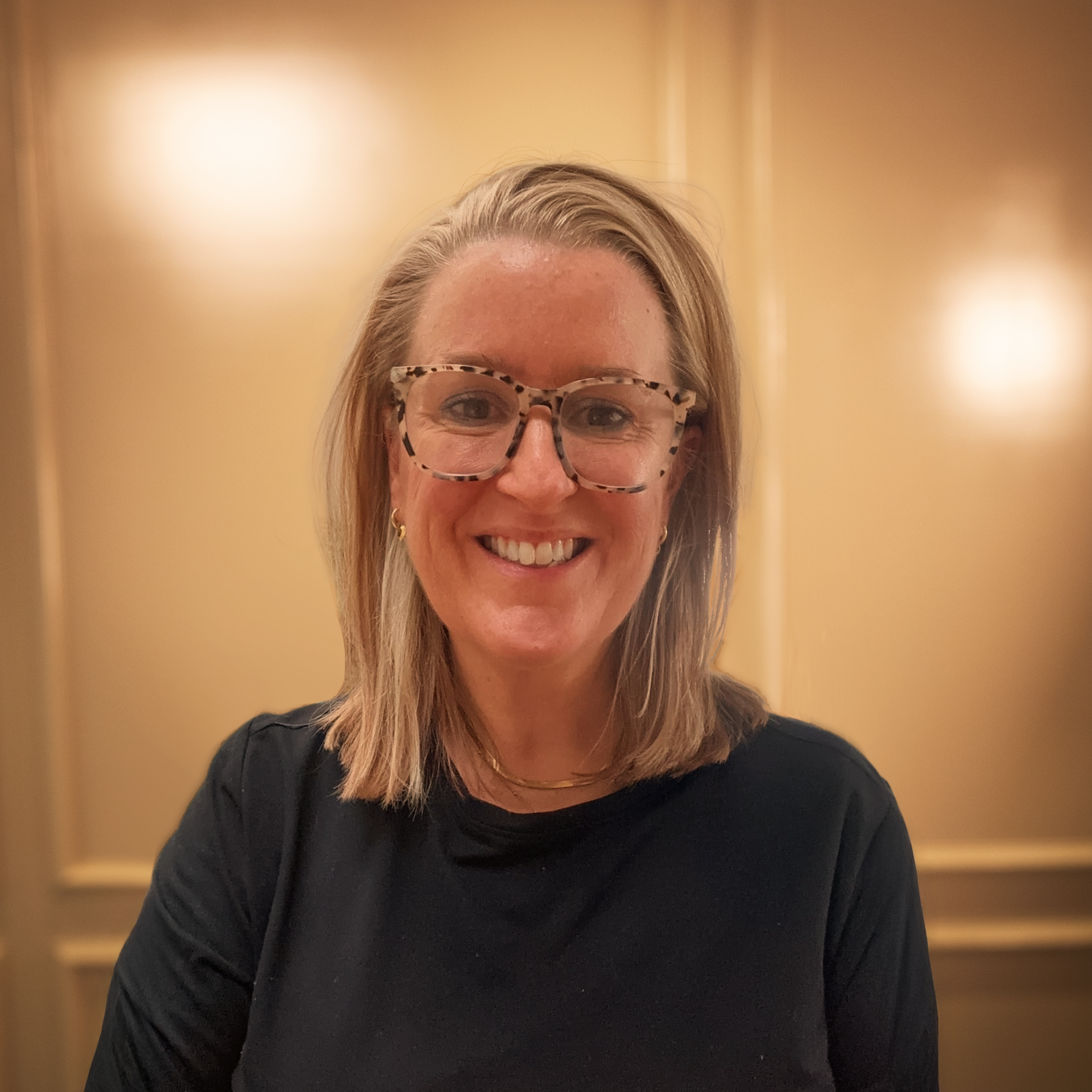
In this episode of Talent Talks, Sarah Davenport and Oli Coote sit down with Lynsey Partlow, Service Director at AVK and one of the "Top 100 Women in Data Centres for 2025". Drawing on her transition from an 18-year corporate career at British Gas to the agile, "speedboat" environment of power solutions, Lynsey provides a grounded perspective on the operational demands of keeping data centres running. The discussion highlights her proactive response to the industry's critical skills shortage through the creation of the AVK Academy, an initiative designed to organically grow technical talent and provide structured mentorship for engineers. Beyond internal development, Lynsey advocates for collective industry action and increased public awareness to bridge the talent gap, emphasising her work with initiatives like FORWARD and the Leap Initiative to foster a more inclusive and visible sector.
Watch this episode on YouTube:
Listen to this episode on:
You can read a transcript of the discussion below:
Sarah Davenport
On today's episode of Capstone Talent Talks, we are joined by Lynsey Partlow, Service Director at AVK and one of the top 100 women in data centres for 2025. Lynsey sits right at the heart of operations in our industry with a real focus on people, skills, and building high-performing teams within critical environments. She's also a strong voice on the future of talent, using her platform to highlight the growing skills shortage as the sector scales. She brings a brilliantly grounded view on what it actually takes to keep data centres running and how we develop the people behind them.
Lynsey, welcome. Thank you so much for joining us.
Lynsey Partlow
Thank you for inviting me.
Sarah Davenport
So let's start at the beginning, how you got into data centres, or rather the beginning of your career, and how that has led you to where you are now.
Lynsey Partlow
So, when I was actually leaving school, I wanted to be a paramedic. I must have had a bit of a desire to be in a fast-paced environment where the pressure was on. Anyway, I never ended up doing that, and I fell into a career as a personal assistant to start with, supporting operations directors and managing directors, so I really got a high-level view of how businesses operate.
Then I moved into a training role, working for a training business that specialised in technical training delivery. That's where I got my first look at how difficult it was to find the right people within various technical skill sets.
I progressed through to become Head of Training at British Gas, working within a gas and electrical world but more B2B rather than domestic, and stayed there for almost 18 years. Whilst there, I moved on to some projects that gave me experience in programme management, customer operations, and field operations delivery.
Then, almost three years ago, I moved across to AVK to build up their service division. I've always been in and around power and technical field operations, but obviously moved from a gas and electrical perspective over into the power solutions organisation that I'm with now.
Oli Coote
How did you find that transition, going from British Gas after 18 years, having seen all parts of that business, and then moving into AVK in the data centre space?
Lynsey Partlow
It was a challenge to start with because you're going from a huge corporate into a business that's around 350 employees now. But the pace that AVK runs at is amazing. Whereas British Gas was often referred to as a cruise liner, it was a vast business, but slow to change, slow to move, AVK is more like a speedboat, going in and around and changing at pace. You can get things done a hell of a lot quicker at AVK, which was great.
I hit the ground running there and really got stuck into what we needed to do to keep up with the pace that AVK was seeing and the amount of business coming our way, which was really exciting and a great opportunity for everyone involved.
I'm still enjoying it now. The challenges continue. The amount of business coming our way, especially in Europe, is tremendous. I think we're helping our clients solve their challenges around power needs. The grid constraints and permits are slow to come through, and we need the power. AVK is in a great position to provide that, whether that be critical backup, a microgrid, or looking at all sorts of alternatives to open the doors for our clients.
Sarah Davenport
Tell us a bit about AVK. How would you describe the work that you do as a business and the role that you play?
Lynsey Partlow
AVK is a power solutions business. We've been operating now for — I think it's 36 years. We were initially founded by Chris Pritchard; his son, Ben Pritchard, is now our CEO. In the past, we predominantly focused on critical backup power in the financial industry and then, more latterly, in the data centre industry.
We've recognised that our clients' power needs are evolving, and we've now moved into varying different types of technology. Moving away from standard diesel backup power, we now do diesel HVO, gas-fired generation, and medium and high speed. We also do microgrids and battery energy storage. We have our own range of SCRs so that we can monitor and control emissions, and we have our own control panels division.
So, we're really a one-stop shop for our clients, they can come to us, talk to us about what they need and what they're looking for, and we'll create and design a solution to suit that.
Sarah Davenport
So, for you as Service Director, talk us through a week in the life of your role.
Lynsey Partlow
There are two types of weeks when you're a Service Director. You have an amazing week where you go home on a Friday, and you've achieved a hell of a lot, or there can be a week where you feel like everything has been thrown at you.
My role as Service Director is to make sure that all of the assets that AVK installs are serviced and maintained, and that they're always at their optimum performance and there when required. Obviously, the different types of installations that we do now means that the level of demand on those assets is rapidly changing. Critical backup needs to be there when the power goes off; when it's a prime power microgrid, that needs to be there all the time because that's the prime power source.
My responsibility covers everything from selling the contract, renewing the contract, account management, planning, scheduling, billing, through to technical delivery, warehouse and parts management, through to the academy as well. So it's quite a wide-ranging role. As I said, you can have an amazing week or you can have loads of call-outs in a week and feel like you've earned that glass of wine on a Friday night.
Oli Coote
Are you finding that a lot of the business at the moment is UK-based, or is it stretching into Europe? I know you've done the microgrid with Pure over in Ireland. Where are you seeing the most activity?
Lynsey Partlow
In the UK, we've got a vast array of contracts and clients because we've been established here for 36 years. In Europe, we've been evolving for maybe the last three to four years. Service is always around two years behind the main project build because it takes that long for the data centres to get up and running, 18 months to two years is when service tends to get involved.
So, we are now mobilised and established in Frankfurt, in Lelystad in the Netherlands, and we are now moving into Berlin and Lisbon. We're also looking at some projects in and around Madrid. There's a lot going on for AVK outside of the UK. We've been established in Ireland for some time and have a strong service base there as well.
Oli Coote
So you're just going to get busier, aren't you? Do you need to travel quite a bit for your role?
Lynsey Partlow
I do, yes. Because I've got teams in all of our AVK offices, I tend to travel quite a bit. I'm actually out with some colleagues in a couple of weeks in Athens, as I'm sitting on an expert panel at an event there. I enjoy going out and seeing all of our clients and seeing our teams on a regular basis. I think it's important to be present when you're managing such a large team.
Sarah Davenport
The teams and functions that report into you, tell us a bit about that to give us a feel for how technical they are and how hands-on versus maybe broader skills.
Lynsey Partlow
Within Service, there are two key functions: client operations and technical services. Our client operations function is made up of sales, account management, and customer operations, a bit of a contact centre environment where they're dealing with incoming calls, scheduling, mobilising engineers, dealing with call-outs, and so on.
Then we've got our technical services function where we have all of our field delivery, in Ireland, the Netherlands, Frankfurt, and the UK, all reporting into the same structure so that we've got consistency of delivery, training, paperwork, and technical standards.
We then have a warehousing and depot function that controls all of our depots, makes sure we've got all the right parts available for all of our assets, manages stock flows, and monitors van stocks for engineers. We have our AVK Academy, which sits within that function. We also have our technical estimating team, they do all the quotations for any defects and remediation that we pick up on the back of our service works.
So, we've got quite a broad range of skills within the service team, from sales and customer experience professionals all the way through to our academy apprentices coming through, and then our level one engineers who are subject matter experts, out there coming up with solutions when they encounter a problem on site.
Sarah Davenport
That's kind of why I asked, because the range of roles within the sector is one of the absolute joys of it, isn't it? You've not come from a technical background yourself, yet you're in this senior service delivery role, leading really technical people as well as broader customer services. I know that Oli was really keen to talk to you about the academy piece, so I'll let Oli ask you about that.
Oli Coote
Yes, exactly. Given the range of roles across the AVK team, from manufacturing all the way through to delivery, how did the academy come about? Tell us a bit more about it, because it seems like a great initiative.
Lynsey Partlow
It's something that we're quite proud of at AVK. In my earlier roles, I recognised quite early that there were challenges in finding the right people within certain skills and trades. Having been involved in delivering internal and external training at a B2B level, I knew we weren't alone in this space.
When I joined AVK, we were really struggling to recruit engineers. It's a small resource pool, and unfortunately, a maturing one too. CVs coming across the desk were very few and far between. The training that was available to support our industry was good, but it wasn't ticking all of our boxes, we had to do the training and then come back and add some rework to it. Even when we found good engineers, we were having to retrain them to get them to where we needed them to be.
So, I had a conversation with Ben Pritchard, our CEO, and had a bit of a moan about how we were struggling to recruit and how the training wasn't great. He said: "So let's go and fix it. Let's go and create something." And that's the difference with being at AVK — you don't just have to accept that there's a problem; we can actually go and create a solution for it.
So that's what we did. Me and a few colleagues decided we were going to go down this academy route, and we got it mobilised for level 4 engineers within 10 months. We took our first intake into AVK in October 2024. They successfully completed their first year and have now been promoted from a level 4 engineer into a level 3, which is great.
We asked them how they felt the year had gone and took feedback from them to put into practice for the next cohort. We've predominantly focused on service — I was a little bit selfish there; we were building the academy to create our own engineers organically and our own internal pipeline of talent into the industry.
But now we're ready to broaden the horizons and the scope of offerings so that other areas in AVK can utilise that function, take the pattern that we've created and make it relevant to them. We've also started to use some of our classroom-based modules to strengthen our induction and educate our clients on the products they've just installed on their site.
Sarah Davenport
That's incredible. So the first year, how many apprentices did you take on?
Lynsey Partlow
We started small because we needed to appoint them a mentor. We have four levels of engineering within service: level 4 is our intake through to level 1, which is our subject matter expert. What we did with our level ones was put them on a training course on how to be a mentor, so they could give feedback, critique, coach, and ask the right questions to ascertain whether the level of understanding was there.
We don't have a huge pool of level ones, so we didn't want to bring in a class of ten and lose people because they didn't feel like they were enjoying the journey or that the journey wasn't crafted right for them. So we started small and brought in three.
Then the next cohort, we went for four but unfortunately only brought in three. And this September we're going to bring in another four. While we're doing that, we're developing the talent pool from level 4 to 3, 3 to 2, and 2 into 1. So eventually we'll have enough level ones that they can all have a trainee in a mentor-and-mentee relationship.
Sarah Davenport
That's brilliant. What I love about that is that from a business perspective, you're imparting really specialist knowledge and expertise throughout the business, but you're also developing those level ones to be more than just subject matter experts — you're building out their personal development too. We're all about mentoring at Capstone; we love it and really see the value for the mentor as well as the mentee.
Lynsey Partlow
Yeah, the engineers have really come on the journey with us. They recognise that now we've got these development pathways, there's an opportunity for everyone to sharpen their skills and do more training. You don't have to stay at level 3 if you don't want to. If you're comfortable there and you're at your best, that's great. But if you want to do more and take on more responsibility, that pathway is there now.
There's nothing worse than not having the opportunity to be trained and to do more. And if we don't do that, someone else will. We're all desperate for this talent within the industry. AVK recognises that if we don't develop and invest in our own people, our competitors will. So we would rather grow our talent and work with them to get them where they need to be than lose them out the door.
Oli Coote
Retention is such a big part of it at the moment, particularly. Through what you've done, that sense of career development is going to spread even further as it moves beyond the engineering roles into other parts of the business — that's going to help retain people, which is really important.
Lynsey Partlow
Definitely.
Sarah Davenport
When you look at the apprentices coming through, what's their background? Are they school leavers or have they completed A levels? And what are you noticing about their profile, background, interests, or skills base that you weren't expecting?
Lynsey Partlow
We've had a bit of a mix. Some of them have just done their A levels and are looking for the next opportunity. Some have already finished their further education, gone out into a role, and found it perhaps wasn't for them, or they didn't feel they had the support and development they anticipated. All of them tend to have a strong passion for mechanical and engineering-type aspects.
I sometimes feel like I'm their mother, which is great, they've come in as school leavers at 18, looking for a future career, and they've just flourished. One of them in particular has seen his confidence and outlook completely transform. He's taken every single opportunity put in front of him.
We sent the first cohort out to do some specialist engine training in Abu Dhabi, they were out there for two weeks. They absolutely loved it. Everything that AVK has asked them to do, they have embraced and really risen to the challenge.
Sarah Davenport
That's amazing. And how many applications do you get for every person you hire? Is it really competitive? I was watching the news last night and there was a huge piece around youth unemployment for graduates and school leavers, and the challenges they face are huge compared to when we were graduating.
Lynsey Partlow
When we did the first cohort, we actually didn't get that many applicants. I think it was because it was new, and also we were a little bit late getting our profile out there. Everyone who is looking at what comes next starts very early.
If I use my own example with my 15-year-old son, he's already started his college applications. I started them back at the end of last year, ready for leaving school in the summer term. So we were a little bit late getting out there, and we took those learnings on board.
Now when we start talking about the academy cohort for September, we're already out there talking about it so that we're capturing potential talent before they've even done their exams. That's meant we've started getting a lot more applications through the door.
On the second cohort, before we'd even officially opened the applications, I had people reaching out to me on LinkedIn and by email asking: "When are you opening applications for this?" Go back two and a half years to when I was having that conversation with Ben saying I was struggling to find engineers — now I have people coming to me saying they want to join us. It's completely turned full circle, which is brilliant.
Oli Coote
That's so good. And with all the business that's happening for AVK, this is just going to get bigger for you in terms of the academy, isn't it?
Lynsey Partlow
It is. To be honest, we wouldn't be able to keep pace with everything on the horizon for us if we weren't doing something to address the skills gap in the industry. That's one of the questions I get asked by a lot of our clients all the time: "Where are you finding your engineers? How are you keeping up with all of these new installations?" In the very early stages of my career with AVK, I didn't really have an answer. Whereas now I say: "Let me tell you about the academy."
And for our clients, the fact that we are investing so much in our people and growing our engineers organically, and that they have a full understanding of the AVK product installation, gives clients more confidence that we're not just sending anyone to maintain their assets. We're sending someone who has grown up with it, been vastly trained on that product, and understands it fully.
Oli Coote
What's your view on the perception versus reality of the skills shortage in the industry? Is it an awareness issue? Is it to do with pipelining? Is it something that goes beyond that? It comes up all the time, and you've got the academy as one part of what's making a difference for you, but what's your broader view across the sector?
Lynsey Partlow
I think the data centre industry is still young, about 30 years old, and it rides in plain sight. Everyone knows there's a data centre, but no one really knows what they are or what they do. I think people assume that to work in a data centre you've got to be a data centre engineer. They don't realise there's a whole ecosystem of careers that sit around the data centre industry, finance, marketing, people, human resources.
And because data centres are so good at hiding in plain sight, people tend to overlook them and don't realise they're there. Then there's the broader skills gap: going back to the mid-2000s, there was a real drop-off in investment in training and apprenticeships, which has truly started to bite across the entirety of the workforce, whether you're gas-trained or electrically-trained.
We've got a highly skilled workforce that are now at the mature end of their career and starting to move towards retirement. We've got this massive gap in the middle, and the investment in training hasn't been there. Everyone perhaps went the university route rather than the trade skills route.
So, there's a whole host of things that need to happen. As much as AVK has invested a lot of money into the academy, and that's addressing our needs today and helping us build our pipeline of talent, I honestly believe that we need to do something more collectively to actually fix the problem that we're all facing. AVK is just one voice within this industry. If we all came together, shared what we're doing, and pulled together more collectively, we might be able to make a bit more of an impact.
Sarah Davenport
I absolutely agree. And there are some really brilliant initiatives happening. Beyond the work you're doing at AVK, are you involved in any of those collective approaches?
Lynsey Partlow
I'm involved with FORWARD, the Forum for Women in Data Centres, and I'm one of the founding members of that initiative. It creates a safe space for women to come together to talk about how they are forging their careers within the industry, where we feel the support needs to be, and where we feel the gaps are. They're also creating a mentorship scheme, partnering young professionals with more experienced professionals to help them develop their careers.
AVK is also an impact partner for Jérôme Plus One, which focuses on young talent within the industry. And we also support the Leap Initiative, which is about companies coming together collaboratively to share training materials and create networking opportunities. Where there is opportunity for AVK and the wider team to jump in and support, we are doing so.
I just think that at a higher level, all of the data centre companies probably need to come together to do something a bit more impactful with the government to see where we can get to.
Oli Coote
It's interesting because we're in it every day, so it can feel like the whole world revolves around the data centre sector. For people outside of it, it's still not really on the radar. It does feel like there's a bit more awareness building because it's more in the media, not all of it positive, but at least it's there. And things like National Data Centre Day are gaining momentum.
If we can link some of those ideas together, get a bit more exposure beyond the data sector and into the wider public, and start talking about it in schools and universities, then hopefully that just starts to raise things. All of a sudden, it becomes something that young people are thinking about and aware of; they start to understand that so much of our lives is run by data centres.
Lynsey Partlow
Exactly. And as I was saying earlier, I found myself at a parents' evening getting quite frustrated that the careers offering was still very traditional, you could be a teacher, you could be a nurse. No one was really talking about this industry that's been dubbed the next industrial revolution. The size of the opportunity and potential for people to move into that space is incredible, yet teachers just aren't talking about it because they don't really know it's there.
I've got people in my friendship circle who, when I moved from British Gas over to work for AVK, supporting data centres, someone said, "What do you mean they support data centres?". Even my friendship circle weren't really aware of the data centre industry because it does kind of hide in plain sight. If you're not working in it, or you don't know anyone who does, or you don't see bits on the media, you probably aren't aware of the size of the opportunity that's there.
Sarah Davenport
It doesn't sound very sexy either, does it? "Data centre." It's not exactly the most inspiring piece of marketing. But it was interesting, at DCW a couple of weeks ago, I was asked to speak to about 150 students from the University of East London about careers in data centres.
When I was preparing for the session, I literally lost count of how many professions you can do within this sector. I was trying to think: what can you not do? You can probably be a doctor within one, they'll have occupational health. I thought you probably can't be a pharmacist, but beyond that, you can pretty much do anything within that sector.
Do you know Lisa Dingwall over at Equinix? She's doing some really interesting work in terms of early careers, and I know she gets a number of people from the industry together for collective impact. She'd definitely be someone to speak to — I think they meet quarterly.
Lynsey Partlow
Yeah, I do know her. I'll reach out.
Sarah Davenport
So let's end on the magic crystal ball. What are you most excited about in terms of the years ahead and the future of the sector?
Lynsey Partlow
From an AVK perspective, the amount of projects we've got ongoing and our expansion into Europe, I'm really excited about that, and about the different types of opportunities that my team have got in front of them. For anyone working at AVK at the moment, the size of opportunity for them to grow and develop within our organisation, never mind the industry, is incredible.
It's not an industry where you need to stand still. If you've got the appetite to grow and develop and you want to further your career, then the sky's the limit. You just need to jump in.
I'm also excited about working with this incredible team that I currently have at AVK, developing them, delivering on all the targets we've set out for the next 5 to 10 years, and seeing where this journey takes us.
From an academy perspective, we want to broaden the coverage into wider AVK and develop more client-facing aspects as well. We're also looking at a programme that works with ex-forces personnel, a kind of resettlement programme, because there is such a talent pipeline there. They already understand quite a lot of the aspects of our industry, especially in critical power, and we can hopefully bring them in, retrain them during that settlement period, and take advantage of that talent pool.
Sarah Davenport
That's really exciting. What a talent pool too, if you need people who are motivated and get things done, forces personnel literally have it written all over them. Have you got links to tap into that more formally?
Lynsey Partlow
We actually have quite a few ex-forces personnel already within AVK. Steve Jones, who's our Head of Technical Services within the Service Division, is ex-forces, I believe he was Royal Engineers, though I'll want to make sure I've got that right before it goes to print.
But yes, having those people in the business means there's already a pipeline and an understanding of what that talent looks like. Having a foot in both camps, the academy and the service operations side, means the academy delivers exactly what we need from a technical perspective. Whereas often when you don't have that foot in both camps, you either get what you're given or you don't get what you want. It's nice that we can control the output.
And as I said, it started as a bit of a passion project between myself and Steve, and we're quite proud of it. We're looking to do more with it as time goes on. Eventually it will probably become a full-time role, and at that point I'll have to say: "Okay, someone else needs to take the reins." I'll step back to the periphery, supporting and advising, but for now, I'm protective of it.
Sarah Davenport
It's growing legs, Lynsey. It's growing legs! Listen, I've absolutely loved this conversation. Thank you so much for sharing so openly the work that you're all doing at AVK. It really highlights the range of opportunities that the sector, as well as your business, offers people. And I am genuinely excited to see the snowball effect of your academy spreading across the broader business.
Lynsey Partlow
Thank you for inviting me. It's been great to speak to you both.
Oli Coote
Thanks, Lynsey, that was brilliant.
Sarah Davenport
Thank you for your time. That was really good.
That was an insightful conversation with Lynsey Partlow, Service Director at AVK and one of the top 100 women in data centres for 2025. Her transition from a long-standing corporate career at British Gas to the high-growth environment of power solutions illustrates the vast potential for professional evolution within the data centre sector. Her experience highlights the critical importance of mentorship, structured development pathways, and the need for the industry to "step out of the shadows" to attract the next generation of professionals. Lynsey’s advocacy for collective action and her involvement in initiatives like FORWARD and the Leap Initiative reflect a deep commitment to fostering inclusive, high-performing teams within critical environments. We are incredibly grateful to Lynsey Partlow for sharing her grounded perspective and inspiring vision with Sarah Davenport and Oli Coote on Capstone Talent Talks.
Related Insights
\\